

Surf travel should be simple. But many surfers experience the opposite. Fins disappear. Wax melts inside bags. Leashes get tangled. By the time you reach the beach, half your gear is buried under clothes or scattered across luggage.
The best way to organize surf gear for travel is to separate equipment into dedicated storage zones using a surf accessories bag, protective board bags, and modular storage systems. Organized packing prevents damage, reduces packing time, and makes equipment easy to access during surf trips.
Surfers who travel frequently rely on simple systems: labeled compartments, compact organizers, and durable gear bags. This method not only protects expensive equipment but also reduces stress during airport security checks, road trips, or boat transfers.
Surf gear organization is not only about convenience. It protects equipment that can cost hundreds or thousands of dollars. For example, a premium surfboard fin set can cost $100–$200, while travel board bags can exceed $300. Poor packing increases the risk of breakage or loss.
This guide explains how to organize surf gear for easy travel, including practical packing systems, surf storage ideas, and gear protection strategies used by experienced surfers. Whether you are traveling by car, plane, or boat, the following methods will help you keep your surf equipment safe, organized, and ready to use.
Why Is Surf Gear Organization Important When Traveling?
Short answer: Organizing surf gear protects equipment, saves time, and reduces travel stress.
Surf equipment includes multiple small accessories. Without a system, these items become difficult to track.
Common surf travel problems include:
- Missing fins or fin screws
- Leashes tangled with clothing
- Wax melting on other equipment
- Surfboard dings caused by loose accessories
- Extra time spent repacking gear at airports
A structured storage approach solves these problems.
According to surf travel data published by Surfline travel guides, most surfers carry between 10–15 small accessories during surf trips. These items include:
- Fin sets
- Leashes
- Wax
- Repair kits
- Sun protection
- Rash guards
- Board tools
When these items are not stored correctly, packing becomes inefficient. Professional surfers and surf coaches often rely on dedicated surf accessories bags to separate gear into compartments.
This method improves efficiency and protects equipment from damage.
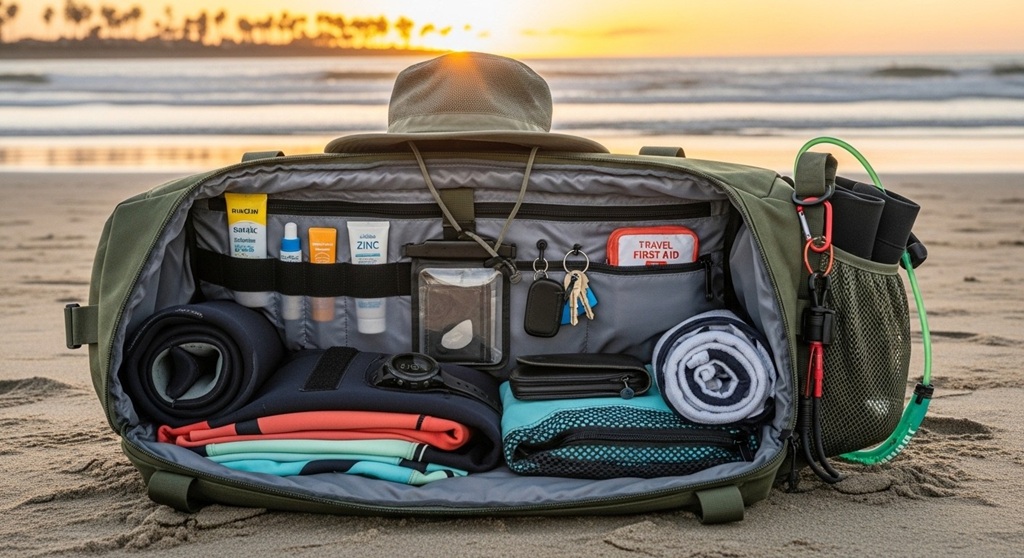
What Gear Should Be Packed in a Surf Accessories Bag?
Short answer: A surf accessories bag should hold small equipment like fins, wax, leash cords, repair kits, and tools.
The goal of a surf accessories bag is to prevent small items from mixing with clothing or surfboards.
Most organized surfers group accessories into categories.
| Gear Category | Examples | Reason for Separation |
|---|---|---|
| Fin Components | Fins, screws, fin key | Small items easy to lose |
| Board Maintenance | Wax, scraper, ding repair kit | Protect other items from wax or resin |
| Safety Equipment | Leashes, spare cords | Prevent tangling |
| Travel Tools | Fin key, multi-tool | Quick access during setup |
| Personal Surf Gear | Sunscreen, earplugs | Small essentials easy to access |
This compartment-based system makes surf setup faster once you reach your destination.
Many surfers also add waterproof pouches inside their accessories bag. These protect items from saltwater exposure after sessions.
How Do Experienced Surfers Pack Surfboards for Travel?
Short answer: Experienced surfers pack boards using padded travel bags, remove fins, and use protective padding to prevent impact damage.
Surfboards are fragile. Even small impacts during airline handling can cause cracks.
Proper packing reduces this risk.
Standard surfboard travel preparation includes:
- Removing fins before packing
- Wrapping rails with foam or towels
- Adding bubble wrap around the nose and tail
- Using padded surfboard travel bags
- Filling empty space with clothing
This technique protects the board while maximizing luggage space.
Professional surf travel companies report that rail damage accounts for nearly 60% of travel-related board dings. Padding rails with foam or clothing significantly reduces this risk.
For long trips, surfers often carry two boards inside one travel bag. A divider layer prevents contact between boards.
What Are the Best Surf Storage Ideas for Organized Travel?
Short answer: The best surf storage ideas combine compact packing, labeled gear zones, and modular bags.
Surf gear storage during travel requires space efficiency.
Experienced surfers follow three key storage principles.
1. Use Modular Storage Bags
Instead of one large bag, modular bags separate gear categories.
- Accessories bag
- Wet gear pouch
- Tool pouch
- Wax container
This system prevents equipment mixing and speeds up packing.
2. Separate Wet and Dry Gear
After surf sessions, wetsuits and rash guards stay wet.
Using waterproof pouches prevents moisture from damaging electronics, clothing, or documents.
3. Label Equipment Sections
Labeling gear zones improves organization.
For example:
- Fin compartment
- Repair tools
- Wax storage
- Safety gear
This small step saves time during early morning surf sessions.
How Can You Pack Surf Gear Efficiently for Flights?
Short answer: Pack surfboards in padded bags, keep accessories in carry-on bags, and distribute weight evenly.
Air travel adds extra complexity to surf gear packing.
Airlines often charge surfboard fees. They also have weight restrictions.
Efficiency matters.
Common airline surf packing strategies include:
- Keep fins and accessories in carry-on luggage
- Place soft items like wetsuits around surfboards
- Use compression packing cubes
- Balance board bag weight evenly
- Remove fragile accessories
According to several airline surf travel guidelines, most airlines allow surfboard bags between 23–32 kg. Exceeding this limit can increase fees.
Organizing gear in advance helps avoid repacking at the airport.
What Travel Mistakes Do Surfers Often Make?
Short answer: The most common mistakes include overpacking, mixing accessories with clothing, and skipping board protection.
These mistakes increase the risk of equipment damage or travel delays.
Frequent errors include:
- Packing wax without containers
- Leaving fins attached to boards
- Forgetting repair kits
- Using non-padded board bags
- Mixing wet gear with dry clothing
Experienced surfers avoid these problems by creating a consistent travel checklist.
Typical surf travel checklists include:
- Surfboard(s)
- Fin sets
- Leashes
- Wax
- Ding repair kit
- Sunscreen
- Rash guards
- Wetsuits
Keeping these items inside a dedicated surf accessories bag ensures nothing is forgotten.
How Do Professional Surfers Manage Surf Gear During Travel?
Short answer: Professional surfers use gear systems with categorized bags, protective board covers, and consistent packing routines.
Professional surf teams travel frequently.
To reduce stress, they rely on structured packing systems.
Typical professional surf travel setup:
- Large padded board travel bag
- Surf accessories organizer
- Wet gear waterproof bag
- Travel repair kit
- Backup fin sets
This approach ensures equipment is always ready.
Surf coaches working with competitive athletes often recommend packing routines. After each surf session, gear returns to the same storage zones.
This simple habit prevents gear loss during long travel schedules.
What Is the Best Surf Travel Packing System?
Short answer: The best surf travel system combines a board travel bag, surf accessories bag, and modular storage pouches.
A balanced packing system might look like this:
| Travel Bag | Purpose |
|---|---|
| Surfboard Travel Bag | Protect boards during transport |
| Surf Accessories Bag | Organize fins, wax, tools |
| Waterproof Pouch | Store wet gear |
| Packing Cubes | Organize clothing |
| Tool Pouch | Carry repair kits and fin keys |
This system balances protection, accessibility, and efficiency.
Surfers who travel frequently often refine their system over time.
The key principle is simple: every piece of gear has a designated storage location.
Conclusion: How Can You Make Surf Travel Easier?
Surf travel becomes stressful when gear is disorganized. Missing fins, damaged boards, and tangled accessories can turn a surf trip into a frustrating experience.
The solution is simple: create a structured packing system.
Start with three essentials:
- A durable surfboard travel bag
- A dedicated surf accessories bag
- Modular storage pouches for gear categories
These tools allow surfers to organize equipment efficiently while protecting valuable gear.
Using smart surf storage ideas—like separating wet and dry gear, labeling compartments, and packing accessories in advance—reduces travel stress and improves surf trip efficiency.
Whether you are traveling to a nearby beach or planning an international surf adventure, organized gear ensures you spend less time packing and more time surfing.
Before your next surf trip, build your own gear organization system. A few small changes in packing habits can make every surf journey smoother and more enjoyable.
FAQs About Organizing Surf Gear for Travel
What is a surf accessories bag used for?
A surf accessories bag stores small surf equipment such as fins, fin keys, wax, leashes, and repair kits. It keeps these items organized and prevents them from getting lost or damaging other gear during travel.
How do surfers protect surfboards during travel?
Surfers protect surfboards using padded travel bags, rail protection, bubble wrap, and soft clothing for cushioning. Removing fins before packing also reduces the risk of damage.
What are the best surf storage ideas for travel?
The best surf storage ideas include modular storage bags, waterproof pouches for wet gear, labeled accessory compartments, and padded surfboard travel bags.
Should fins be removed before traveling with a surfboard?
Yes. Removing fins before travel prevents pressure damage inside board bags and protects the fin boxes during transport.
How can I prevent surf wax from melting during travel?
Store wax inside sealed plastic containers or wax cases. Keeping wax inside a surf accessories bag prevents it from spreading to other gear.
What is the ideal surf travel packing checklist?
A typical surf travel checklist includes surfboards, fin sets, leashes, wax, repair kits, wetsuits, rash guards, sunscreen, and a surf accessories bag to store small equipment.
How much does surf gear usually weigh when traveling?
A surfboard travel bag with boards and accessories usually weighs between 20–32 kg depending on the number of boards and equipment packed.
Read More Also: What Is the Best Way to Dry Homemade Pasta? Complete Guide
Find out: How to Build the Perfect Beginner Skateboard Setup