
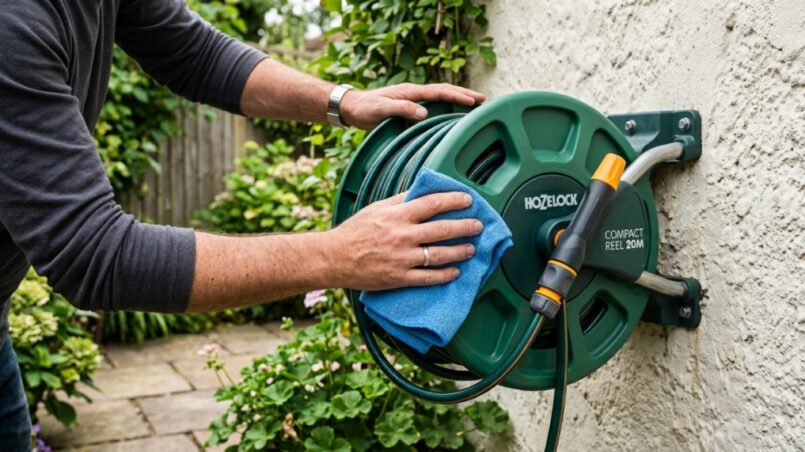
A retractable hose reel is one of the most convenient upgrades you can make to your outdoor space. No more wrestling with tangled hoses or dragging heavy fittings across the yard—just pull, lock, and release for a satisfying automatic retraction. But that convenience comes with a catch: these mechanisms are more complex than a standard garden hose. When they fail, they often fail because of simple neglect rather than manufacturing defects. The good news is that keeping your reel operating smoothly for a decade or more requires less effort than you might think. In this guide, we’ll walk through the exact steps to maintain retractable hose reel systems, covering everything from seasonal prep to fixing common issues before they become expensive problems.
Key Takeaways
- Always relieve water pressure completely before retracting the hose; retracting under pressure is the fastest way to damage the internal seals and spring mechanism.
- Flush the system and clean the hose surface every few months to prevent grit and mineral buildup from scratching the internal guide and jamming the lock.
- Lubricate only the specified moving parts—using the wrong lubricant on the brake or spring can attract dust and cause more harm than good.
- Store the reel properly during freezing temperatures to prevent cracked fittings and frozen internal components, even if the unit claims to be “weather-resistant.”
- Inspect the connection points and O-rings at the start of every season to catch small leaks before they corrode the internal cartridge.
Why Retractable Hose Reels Fail Prematurely

Most retractable hose reels don’t die from old age; they die from accumulated small mistakes. The most common killer is retracting the hose while the water is still turned on. When the hose is under pressure, the internal hose guide and locking mechanism are forced to work against several pounds of resistance. Over time, this wears down the plastic ratchet teeth and stretches the spring beyond its designed tension curve.
The second major culprit is environmental exposure. UV rays from the sun degrade the outer hose jacket, making it stiff and prone to kinking at the point where it enters the reel housing. When the hose becomes stiff, it doesn’t retract evenly, causing the hose to bunch up on one side of the drum. This uneven winding puts lateral pressure on the spindle, bending it over time. If you pay attention to how your unit fails, you can usually trace it back to one of these three issues: hydraulic stress, environmental degradation, or mechanical misalignment. Understanding this is the first step to learning how to maintain retractable hose reel units effectively.
Your Seasonal Maintenance Checklist
A well-structured maintenance routine doesn’t have to be time-consuming. In fact, you can handle most of these tasks in under fifteen minutes at the beginning and end of the gardening season. The key is consistency. Here is a breakdown of what you should do, when you should do it, and why it matters.
Spring Start-Up: Preparing for Heavy Use
After months of sitting idle, your reel needs a gentle reintroduction to service. Start by inspecting the entire length of the hose for cracks, cuts, or weak spots. Pay special attention to the first two feet of hose nearest the reel, as this section experiences the most friction during retraction.
Next, check the swivel fitting where the hose connects to the water supply. This is a common leak point. If it’s dripping, try tightening it gently with a wrench—but be careful not to overtighten, as brass fittings can crack if you force them. If the leak persists, the O-ring inside the fitting is likely worn out. Most hardware stores sell replacement O-rings for less than five dollars, and swapping one out takes about two minutes.
Finally, run water through the system for a full minute before engaging the retraction mechanism. This flushes out any debris, insects, or spider webs that may have accumulated in the nozzle or coupling during the off-season. Once you have a clear, steady stream, you’re ready to retract.
Mid-Season Care: Keeping It Smooth
During the peak season, your reel works hard. At least once a month, wipe down the hose with a damp cloth as it retracts. This might seem overly cautious, but think about what your hose touches: dirt, mud, grass clippings, and potentially fine sand. As the hose winds back into the housing, a wet guide channel can turn that grit into sandpaper, slowly grinding away at the plastic bushing that centers the hose.
If you live in an area with hard water, mineral deposits are another mid-season concern. These can build up inside the hose and at the spray nozzle, reducing water pressure and putting extra strain on the hose walls. If you notice a significant drop in flow, disconnect the hose from the supply and fill it with a solution of one part white vinegar to three parts water. Let it sit for about thirty minutes, then rinse thoroughly. This simple step can extend the life of the hose lining significantly.
Fall Winterization: Protecting Against Freeze Damage
Freezing temperatures are the nemesis of any outdoor watering system. Even if your hose reel is rated for “all-weather” use, the water left inside the hose will expand when it freezes, and expanded water can crack the internal cartridge or split the hose lining from the inside out.
Before the first hard frost, disconnect the reel from the outdoor spigot completely. Drain all water by extending the hose fully and letting it hang at a downward angle for several minutes. If your model has a drain plug, open it to ensure no water remains trapped in the drum. Once fully drained, retract the hose and cover the entire unit with a breathable waterproof cover, or bring the unit indoors to a garage or shed. Just remember that bringing it inside requires the hose to be completely dry; otherwise, you risk mold and mildew growth inside the housing.
Lubrication: What to Use and What to Avoid
There is a widespread misconception that all squeaks and stiffness can be solved with a can of WD-40. This is where many well-intentioned homeowners accidentally damage their reels. WD-40 is a solvent and water displacer, not a true lubricant. While it can temporarily silence a squeak, it evaporates quickly and leaves behind a sticky residue that attracts dust and grit. Over time, this residue can clog the internal brake mechanism and cause the slide guide to bind.
For the moving parts of a retractable hose reel, you want a dry PTFE lubricant or a silicone-based spray. These lubricants do not attract dust the way wet oils do, and they remain effective in both extreme heat and cold. Apply a light coat to the slide guide rail (the channel the hose runs through) and to the swivel joint if it feels stiff.
There is one part you should never lubricate: the ratchet brake. This is the mechanism that catches the hose when you pull it out to a specific length. This brake relies on friction to work correctly. If you spray it with any lubricant, it will slip, and your hose will no longer lock at the length you set. If your hose is retracting too fast and won’t lock, that is a sign of a worn brake, not a need for lubrication.
Cleaning the Reel Housing and Guide Arm
While the internal mechanics are doing the heavy lifting, the external housing also needs attention to keep the system functioning correctly. Dirt and debris can accumulate on the guide arm—the metal or plastic arch that guides the hose as it feeds into the housing. If this arm becomes crusted with dried mud, it will add friction to the retraction process and can cause the hose to feed at an angle.
Use a soft brush and mild soapy water to clean the guide arm and the entrance port. Avoid using a pressure washer aimed directly at the reel housing. The high-pressure spray can force water past the seals and into the spring cartridge, which will cause rust and corrosion over time. A gentle wipe down is sufficient for the exterior.
If you want to maintain retractable hose reel systems with minimal effort, consider mounting the unit in a shaded area or using a UV-protective cover. Direct UV exposure is the single most significant factor in hose jacket degradation, and protecting the reel from the sun will preserve the flexibility of the internal hose guide.
Common Troubleshooting and Quick Fixes
Even with meticulous care, you will likely encounter minor issues. Here is a quick guide to diagnosing symptoms, understanding the cause, and applying a practical fix before you consider a replacement.
| Symptom | Likely Cause | Recommended Fix |
|---|---|---|
| Hose won’t retract fully | Kink near the nozzle end; guide jammed with debris | Straighten the hose manually; clean the guide port with a cloth. |
| Hose retracts too fast | Brake mechanism is worn or dirty | Do not lubricate. Check for heavy grit build-up; replace brake cartridge if needed. |
| Water leaks at supply connection | Worn O-ring in the swivel fitting | Replace the O-ring (standard 3/4″ hose washer). |
| Hose locks but slides when pulled | Ratchet teeth are stripped or spring tension is low | Inspect the internal drum; this usually requires a manufacturer replacement part. |
| Hose is stiff and resists retraction | UV damage has stiffened the hose jacket | Apply a silicone protectant to the hose; if cracking, replace the hose. |
When to Call It Quits
There comes a point where maintenance is no longer cost-effective. If the spring mechanism inside the reel has snapped—which you can usually identify by a complete loss of retraction tension—it is rarely worth repairing. Most internal cartridges are sealed units, and attempting to replace the spring yourself often does more damage than good, especially in cheaper plastic-housed models.
Similarly, if the main spindle bearing is worn and the drum wobbles as the hose winds, the reel will never operate smoothly again. At this point, you are better off looking at a new model rather than sinking time and money into a failing housing. Remember that the knowledge of how to maintain retractable hose reel units is transferable—your next reel will last longer because of the habits you build now.
Extending the Life of the Hose Itself
People often overlook the fact that the retractable mechanism is only half the system. The hose itself has a finite lifespan, and its condition directly affects the mechanics of the reel. A hose that has become limp or has weak spots can fold over and kink inside the housing, blocking the retraction path entirely.
To maximize hose life, avoid leaving the hose stretched out in the hot sun for extended periods. Even high-quality hoses soften when heated, making them more susceptible to stretching and losing their shape. Additionally, always release the nozzle pressure—not just the spigot pressure—before retracting. If you have a spray nozzle with a lock-on trigger, fully release the trigger and drain the water out of the hose before pulling it back. This reduces the weight of the hose, making it easier for the spring to pull it in.
If you are looking for specific advice on which models hold up best in harsh climates or high-usage scenarios, you may want to look deeper into specific unit reviews. Once you understand the common failure points we’ve outlined here, you’ll be able to spot the right features to look for in a replacement unit. For a detailed breakdown of what works best in extreme heat and dry conditions, you can maintain retractable hose reel confidence by researching units that offer metal guides and replaceable hose cartridges.
Fast-Acting Habits That Save You Money
Beyond the slow seasonal rituals, there are quick daily habits that will keep your equipment in top shape. First, always retract the hose slowly. Letting it snap back at full speed causes the hose to slap against the guide arm, which over years can crack the plastic components. Guide the hose with your hand as it retracts, ensuring it lays flat and even on the drum.
Second, keep the spray nozzle in a “vented” or “off” position when not in use. If you leave a nozzle sealed and the hose is in direct sunlight, the water inside expands due to heat. This creates extreme pressure that stresses the hose walls and the internal connections. Releasing this pressure before it builds up will prevent micro-cracks that eventually turn into leaks.
Third, avoid hanging heavy items like wrenches or power cords on the hose itself. It may seem harmless, but the added weight pulls down on the hose guide and stresses the swivel joint, causing premature wear at the entry point, Proper garden tool care goes hand in hand with broader yard upkeep; for instance, understanding Why it’s important to look after trees in your garden ensures your entire outdoor space thrives season after season.
Frequently Asked Questions
How often should I lubricate my retractable hose reel?
You should lubricate the slide guide and swivel joint twice a year—once in the spring and once in the late summer. Use a dry PTFE or silicone spray. Never lubricate the brake mechanism or ratchet, as this will cause the lock to slip.
Can I leave my retractable hose reel outside all year?
You can, but you must winterize it first. Drain all water completely and cover the unit to protect it from ice and UV rays. If you live in a region with hard freeze cycles, it is safer to disconnect the unit and store it in a garage or shed.
Why does my hose retract too fast?
This usually means the brake mechanism is worn out or contaminated with dirt. Do not spray lubricant on it. Disassemble the unit and clean the brake surfaces. If they are worn smooth, you will need to order a replacement brake cartridge from the manufacturer.
Is it okay to use a pressure washer to clean the hose reel?
No. Aiming a pressure washer at the reel housing can force water past the internal seals, leading to rust and corrosion. Use a soft cloth, mild soap, and a garden hose on a gentle setting to wipe down the exterior.
Do I need to replace the hose on my reel, or can I use any standard hose?
You need to use a hose specifically designed for retractable reels. Standard garden hoses are often too thick and stiff to fit through the guide sleeve and will jam the retraction mechanism. Always order the manufacturer’s replacement hose or a compatible retractable hose with a smooth outer jacket.
What is the most common sign that my reel needs replacing?
The clearest sign is a loss of retraction power—when the hose comes out easily but refuses to pull itself back in. This indicates a stretched or broken spring. Because the spring is housed in a sealed cartridge, it is often more cost-effective to replace the entire unit.
Conclusion
Maintaining a retractable hose reel is less about complex repairs and more about consistent, simple habits. The key is to understand that this is a precision mechanism living in a harsh outdoor environment. By regulating water pressure, protecting the unit from freezing temperatures, keeping grit off the guide channel, and using the right lubricant on the right parts, you can easily double the lifespan of your reel. Taking the time to perform a quick seasonal check-in will prevent the vast majority of catastrophic failures. Treat your hose reel with the same basic care you give your car or your lawnmower, and it will reward you with years of one-handed, tangle-free watering.