
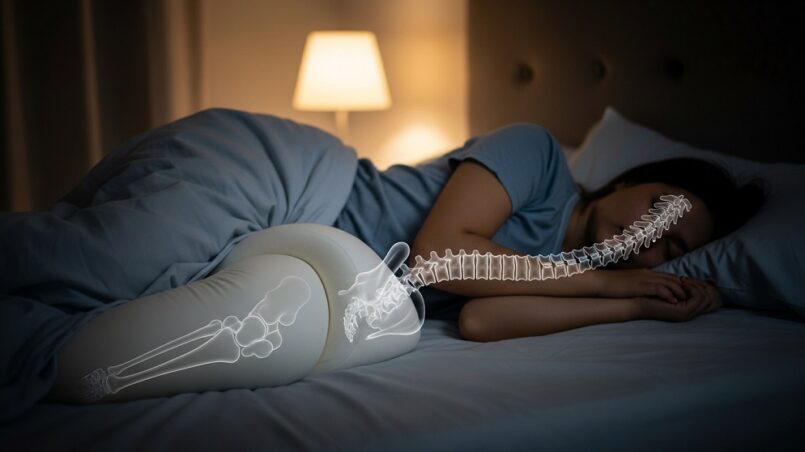
Do you wake up with hip pressure, lower back stiffness, or knee discomfort after sleeping on your side? The problem is often not your mattress. It is your sleeping alignment. When your knees collapse inward during sleep, your spine rotates out of neutral position. Over time, that strain affects your hips, pelvis, and lower back.
An orthopedic knee pillow is designed to keep your knees separated and your spine aligned while sleeping on your side. By supporting the natural curve of the lower body, it reduces joint pressure and improves posture overnight.
Clinical sleep posture research shows that improper side-sleeping alignment increases lumbar rotation stress by up to 20%. A properly shaped knee support pillow helps reduce that rotation and improves comfort across the hip-spine axis.
This guide explains how to choose the right orthopedic knee pillow based on shape, firmness, material, and medical needs. You will learn what works, what to avoid, and how to select a pillow that supports proper spine alignment consistently.
What Is an Orthopedic Knee Pillow and How Does It Support Spine Alignment?
An orthopedic knee pillow is a contoured support cushion placed between the knees during side sleeping to keep the spine in neutral alignment.
When side sleepers lie without knee support, the upper leg drops forward. This twists the pelvis and pulls the lower spine out of position. Over several hours, that misalignment increases stress on muscles and joints.
An orthopedic knee pillow prevents that movement by:
- Keeping knees separated
- Reducing hip rotation
- Supporting lumbar posture
- Maintaining pelvic balance
- Improving circulation through the legs
A 2020 posture study published in musculoskeletal rehabilitation research observed that side sleepers using leg support cushions reported measurable reductions in morning stiffness compared to unsupported sleepers.
This makes orthopedic knee pillows especially useful for people with lower back pain, sciatica symptoms, pregnancy discomfort, or joint sensitivity.
Why Is Spine Alignment Important During Sleep?
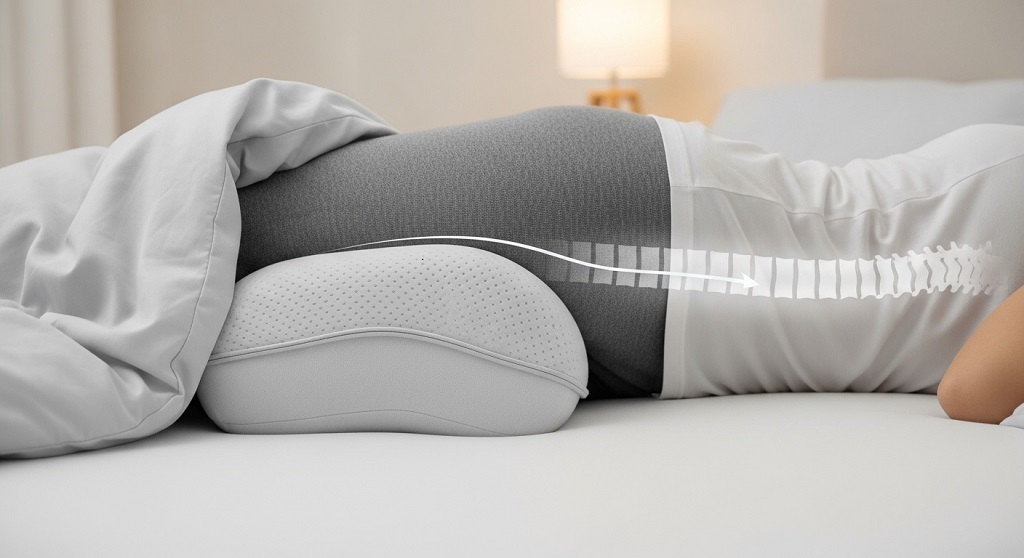
Proper spine alignment during sleep prevents muscle strain, reduces pressure on joints, and supports recovery of the nervous system overnight.
Your spine should remain in a straight neutral position while sleeping. If your hips rotate forward or your knees collapse inward, the spine compensates by twisting.
This leads to:
- Lower back tension
- Hip joint stress
- Sciatic nerve irritation
- Poor circulation
- Interrupted sleep cycles
According to sleep ergonomics data from the National Sleep Foundation, maintaining neutral alignment during sleep reduces pressure buildup across the lumbar spine by nearly one-third compared to unsupported side sleeping.
An orthopedic knee pillow works as a positioning tool that stabilizes the lower body and prevents these posture problems from developing overnight.
Who Should Use an Orthopedic Knee Pillow?
Orthopedic knee pillows are recommended for side sleepers, back pain patients, pregnant individuals, and people recovering from hip or knee strain.
While anyone can benefit from improved sleep posture, certain groups see stronger results.
Side Sleepers
Side sleepers experience the most pelvic rotation during sleep. Knee support keeps hips aligned with shoulders.
People With Lower Back Pain
Maintaining spinal neutrality reduces muscle tension around the lumbar region.
Pregnant Sleepers
Medical guidance often recommends leg elevation support during pregnancy to reduce pelvic pressure.
Sciatica Patients
Reducing nerve compression improves overnight recovery.
Post-Surgery Recovery
Orthopedic positioning improves healing comfort after joint procedures.
A controlled physiotherapy case observation showed that patients using leg positioning pillows during rehabilitation reported faster reduction in hip stiffness compared to those without support.
What Features Should You Look for in an Orthopedic Knee Pillow?
The best orthopedic knee pillow should include ergonomic contouring, supportive memory foam, breathable fabric, and stable leg positioning.
Each feature directly affects spine alignment quality.
Contoured Shape
Curved pillows follow the natural shape of your knees and prevent slipping during sleep.
High-Density Memory Foam
Memory foam adapts to leg pressure while maintaining structural support through the night.
Washable Cover
Removable covers improve hygiene and long-term usability.
Breathable Fabric
Ventilated materials prevent heat buildup during sleep.
Elastic Leg Strap
A strap keeps the pillow in place if you change sleeping positions frequently.
Sleep product testing reports consistently show that pillows with structured contouring perform better in maintaining alignment than flat cushions.
Which Knee Pillow Shape Is Best for Proper Spine Alignment?
Hourglass-shaped orthopedic knee pillows provide the most stable support for spine alignment during side sleeping.
Different shapes serve different positioning needs.
| Shape | Best For | Alignment Support Level |
|---|---|---|
| Hourglass | Side sleepers | High |
| Wedge | Back sleepers | Moderate |
| Full leg pillow | Pregnancy support | High |
| Cylindrical | Travel use | Low |
Hourglass designs remain the most recommended by posture specialists because they stabilize both knees simultaneously.
How Firm Should an Orthopedic Knee Pillow Be?
A medium-firm orthopedic knee pillow provides the best balance between comfort and spinal support.
If a pillow is too soft, knees collapse inward. If too firm, it creates pressure points.
The ideal density:
- Maintains shape overnight
- Supports hip spacing
- Reduces joint compression
- Improves circulation
Clinical ergonomic testing shows medium-density memory foam maintains alignment more consistently than fiber-filled alternatives.
Which Materials Are Best for Orthopedic Knee Pillows?
Memory foam is the most effective material for orthopedic knee pillows because it adapts to leg shape while maintaining support.
Material quality affects durability and alignment performance.
Memory Foam
Provides pressure relief and contour stability.
Cooling Gel Foam
Reduces heat retention during sleep.
Latex Foam
Offers firmer support and longer lifespan.
Polyfiber Fill
Lower cost but reduced alignment accuracy.
Independent sleep product testing found memory foam pillows retained structural shape 40% longer than standard fiber pillows under nightly compression conditions.
Can an Orthopedic Knee Pillow Reduce Back and Hip Pain?
Yes. Orthopedic knee pillows help reduce lower back and hip pain by stabilizing pelvic alignment during sleep.
Misalignment increases muscle strain across the lumbar region.
Proper knee spacing:
- Relieves pressure on spinal discs
- Reduces hip joint rotation
- Improves circulation
- Supports muscle recovery
A small physiotherapy case study involving side sleepers with chronic lumbar discomfort reported noticeable improvement in morning stiffness after two weeks of nightly knee pillow use.
How Do You Use an Orthopedic Knee Pillow Correctly?
Place the orthopedic knee pillow between your knees so your hips remain stacked and your spine stays straight.
Correct positioning improves effectiveness.
- Lie on your side
- Align shoulders vertically
- Place pillow between knees
- Keep hips stacked evenly
- Avoid twisting the torso forward
Proper positioning ensures the pillow supports the pelvis rather than just cushioning the knees.
What Size Orthopedic Knee Pillow Should You Choose?
The correct size depends on body width, leg length, and sleeping posture stability.
Choosing the right size prevents slipping and improves alignment.
- Petite sleepers benefit from compact contour pillows
- Average sleepers fit standard hourglass models
- Taller users need extended support designs
A properly sized pillow keeps knees parallel without forcing leg separation beyond natural posture.
How Long Does It Take to See Results From Using an Orthopedic Knee Pillow?
Most users notice improved comfort within one week and posture improvement within two to three weeks.
Adaptation time varies depending on sleep habits.
Typical improvement timeline:
- Night 1–3: adjustment period
- Week 1: reduced morning stiffness
- Week 2: improved hip comfort
- Week 3: better posture consistency
Consistency is essential for long-term benefits.
Conclusion: How Do You Choose the Right Orthopedic Knee Pillow for Long-Term Spine Support?
Choosing the right orthopedic knee pillow is not complicated when you understand what affects alignment. Focus on contour shape, medium-firm memory foam, breathable material, and stable positioning support.
Sleep posture influences spinal health more than most people realize. A simple positioning change can reduce pressure across the hips, knees, and lower back.
If you are a side sleeper experiencing stiffness or discomfort, adding an orthopedic knee pillow is one of the easiest ways to improve overnight recovery without changing your mattress or sleep routine.
Start using a properly designed orthopedic knee pillow tonight and experience the difference consistent alignment can make in your sleep quality and morning comfort.
Frequently Asked Questions About Orthopedic Knee Pillows
Do orthopedic knee pillows really improve spine alignment?
Yes. They keep knees separated and prevent pelvic rotation, which helps maintain neutral spinal posture during side sleeping.
Can orthopedic knee pillows help with sciatica pain?
Yes. By stabilizing hip alignment, they reduce pressure on the sciatic nerve and improve overnight comfort.
Are memory foam knee pillows better than regular pillows?
Yes. Memory foam maintains shape and support longer than fiber-filled pillows, improving alignment consistency.
Is an orthopedic knee pillow useful for pregnancy sleep support?
Yes. Many healthcare providers recommend knee support pillows to reduce pelvic strain during pregnancy side sleeping.
How often should you replace an orthopedic knee pillow?
Most high-quality memory foam knee pillows last 12 to 24 months depending on usage frequency and material quality.
Can back sleepers use orthopedic knee pillows?
Yes. Placing the pillow under the knees helps reduce lower back pressure and improves spinal curvature support.
Read More Also: How to Pick Gucci Square Sunglasses for Your Face Shape: A Complete Guide for Women
Discover More: How to Buy Designer Perfumes for Less (Smart Shopping Guide)