
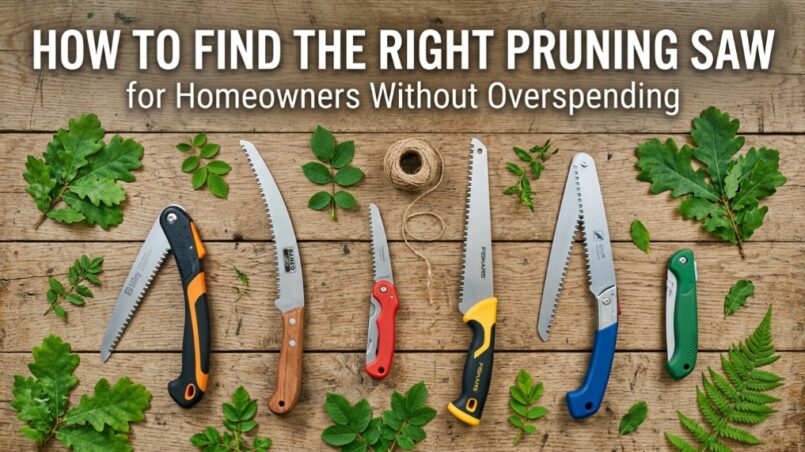
Most homeowners don’t realize that buying a pruning saw that is too large can damage more branches than a dull blade ever will. The quickest way to choose the right tool is to match the saw’s blade length, tooth pattern, and cutting style to the size of the branches you regularly cut. This pruning saw buying guide helps homeowners avoid wasting money on oversized, professional-grade tools they rarely need while still getting clean, efficient cuts that promote healthy plant growth.
Many people purchase the cheapest saw available or overspend on professional arborist equipment. The result is often frustrating: rough cuts, slow pruning sessions, damaged trees, and tools that sit unused in the garage. A pruning saw should make seasonal maintenance easier, not harder. Choosing the wrong blade length, tooth configuration, or handle design can turn a simple afternoon yard project into a tiring chore.
Whether you’re maintaining fruit trees, trimming shrubs, removing dead branches, or managing backyard landscaping, selecting the right pruning saw requires understanding how different models perform in real-world conditions. This guide explains exactly what homeowners should look for, what features matter most, and where spending extra money actually makes sense.
What Is a Pruning Saw and Why Do Homeowners Need One?
Direct Answer: A pruning saw is a specialized hand saw designed to cut living wood efficiently and cleanly without damaging trees, shrubs, or ornamental plants.
Unlike traditional woodworking saws, pruning saws use aggressive tooth patterns engineered to cut through green wood. They are commonly used for removing dead limbs, thinning crowded branches, shaping trees, and maintaining landscaping.
Many homeowners discover that pruning shears work well for small stems but struggle with branches thicker than 1 inch. A pruning saw bridges that gap, allowing smooth cuts without excessive force.
For homeowners researching outdoor cutting tools, understanding the differences between blade types and cutting applications is just as important as learning how to choose the right saw for accurate cutting projects before making a purchase.
Common uses include:
- Removing dead tree limbs
- Pruning fruit trees
- Trimming ornamental shrubs
- Cutting storm-damaged branches
- Managing overgrown landscaping
- Clearing small backyard vegetation
Because pruning saws create cleaner cuts than axes or general-purpose saws, they help trees heal faster and reduce disease exposure.
How Do You Choose the Right Pruning Saw Size?
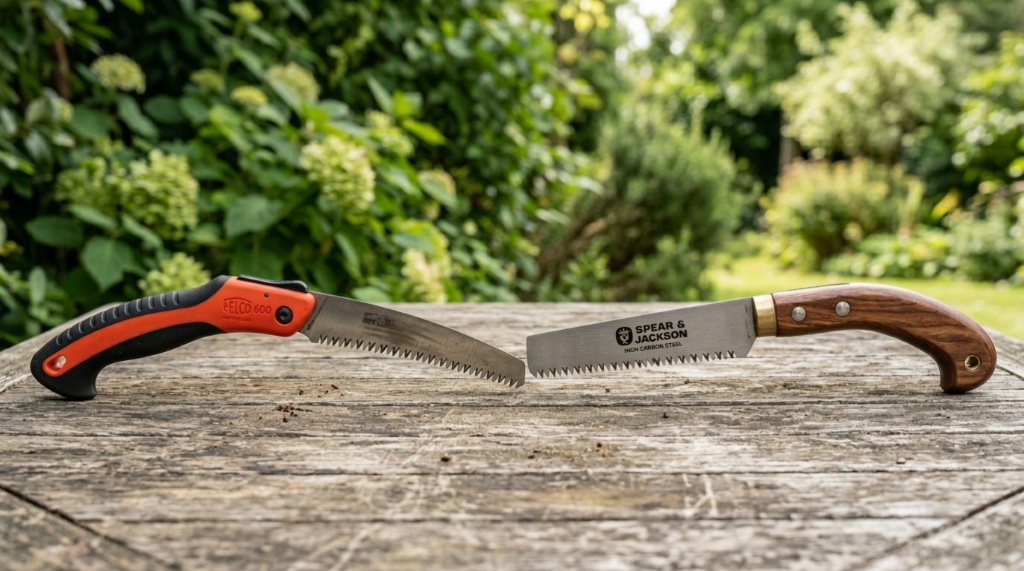
Direct Answer: Select a blade length based on the diameter of branches you most frequently cut, not the largest branch you may occasionally encounter.
Blade length significantly affects comfort, efficiency, and control.
| Blade Length | Best For | Typical Branch Size |
|---|---|---|
| 6–8 Inches | Light pruning and shrubs | Up to 2 inches |
| 8–10 Inches | General homeowner use | 2–4 inches |
| 10–13 Inches | Mature trees and landscaping | 4–6 inches |
| 13+ Inches | Heavy-duty work | 6 inches and larger |
Most homeowners benefit from an 8–10-inch blade because it balances cutting power with maneuverability.
A blade that is too long can become awkward in dense foliage. Conversely, a blade that is too short requires extra strokes and increases fatigue.
Before purchasing, evaluate your property:
- Mostly shrubs → shorter blade
- Fruit trees → medium blade
- Mature shade trees → longer blade
- Mixed landscaping → versatile mid-length blade
What Blade Types Are Best for Residential Tree Pruning?
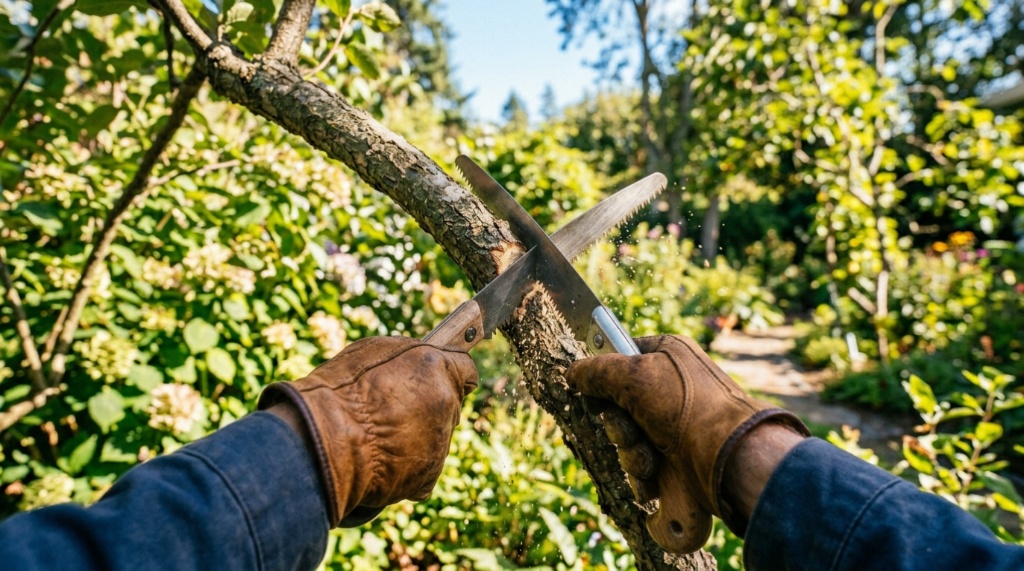
Direct Answer: Curved blades generally cut faster on green wood, while straight blades offer better precision and control.
Blade shape directly impacts cutting performance.
Curved Blade Pruning Saws
Curved blades naturally pull into branches during the cutting stroke. This design increases cutting efficiency and reduces effort.
Benefits include:
- Faster cutting speed
- Less arm fatigue
- Excellent for overhead branches
- Strong grip during pull strokes
They are particularly popular among gardeners and homeowners maintaining large trees.
Straight Blade Pruning Saws
Straight blades provide greater precision and cleaner directional control.
Advantages include:
- More accurate cuts
- Easier access in tight spaces
- Suitable for delicate pruning
- Good for detailed landscaping work
If your primary goal is shaping ornamental trees and shrubs, a straight blade may be preferable.
Folding Blade Pruning Saws
Folding models offer portability and safer storage.
Ideal for:
- Home gardeners
- Camping properties
- Small yards
- Occasional pruning tasks
Many homeowners find folding saws provide the best balance between convenience and functionality.
Which Pruning Saw Features Actually Matter?
Direct Answer: Focus on blade quality, tooth design, handle comfort, locking mechanisms, and corrosion resistance rather than marketing claims.
Manufacturers often advertise dozens of features, but only a few genuinely impact performance.
Impulse-Hardened Teeth
Impulse-hardened teeth stay sharp significantly longer than standard teeth.
Benefits:
- Extended lifespan
- Less maintenance
- Consistent cutting performance
- Reduced replacement frequency
Comfortable Ergonomic Handle
A quality handle improves control and reduces strain during extended pruning sessions.
Look for:
- Rubberized grip
- Non-slip texture
- Balanced weight distribution
- Comfortable finger placement
Secure Blade Lock
Folding pruning saws should lock firmly in both open and closed positions.
A weak locking mechanism can create safety hazards during use.
Rust-Resistant Materials
Outdoor tools regularly encounter moisture, sap, and varying weather conditions.
Quality steel coatings help prevent corrosion and extend service life.
Homeowners comparing premium models can explore expert recommendations through this comprehensive review of high-performing pruning saws for home and garden maintenance to better understand which features deliver real value.
How Much Should a Homeowner Spend on a Pruning Saw?
Direct Answer: Most homeowners can purchase an excellent pruning saw for $20–$50 without sacrificing performance or durability.
Higher prices do not automatically mean better results.
| Price Range | What You Get | Recommended? |
|---|---|---|
| Under $15 | Basic construction | Usually No |
| $20–$35 | Solid homeowner quality | Yes |
| $35–$50 | Premium homeowner models | Highly Recommended |
| $50+ | Professional-grade tools | Only if heavily used |
Most homeowners prune seasonally rather than daily. Therefore, professional arborist equipment often provides limited additional value.
Instead of focusing on brand prestige, prioritize:
- Blade quality
- User comfort
- Safety features
- Durability
- Warranty coverage
Are Folding Pruning Saws Better Than Fixed-Blade Models?
Direct Answer: Folding pruning saws offer better portability and storage, while fixed-blade models typically provide maximum strength and durability.
For most residential users, folding saws are more practical.
Benefits of Folding Saws
- Compact storage
- Enhanced safety
- Easy transport
- Suitable for homeowners
Benefits of Fixed-Blade Saws
- Maximum structural strength
- No moving parts
- Professional-grade durability
- Excellent for frequent use
Unless you regularly maintain large properties, a folding model usually offers the better homeowner experience.
What Tooth Configuration Works Best for Cutting Green Wood?
Direct Answer: Medium-to-coarse tooth patterns with aggressive pull-cut designs generally perform best on fresh, living wood.
Tooth design affects cutting speed more than blade length in many situations.
Pruning saws commonly feature:
- Triple-ground teeth
- Impulse-hardened edges
- Pull-cut geometry
- Wide tooth spacing
Triple-ground teeth create three cutting edges per tooth, increasing efficiency.
Many modern pruning saws cut on the pull stroke rather than the push stroke. This approach reduces blade flex and improves control.
For green wood and living branches, aggressive tooth patterns remove material faster while creating cleaner cuts.
How Can You Tell If a Pruning Saw Is High Quality?
Direct Answer: A quality pruning saw combines durable steel, sharp tooth geometry, comfortable ergonomics, and reliable safety mechanisms.
When shopping online or in stores, inspect the following indicators:
- Precision-ground teeth
- High-carbon steel blade
- Corrosion-resistant coating
- Secure locking system
- Comfortable grip material
- Positive customer reviews
- Replacement blade availability
Established tool manufacturers often provide replacement blades, extending tool lifespan and reducing long-term costs.
Reading verified customer reviews can also reveal real-world durability and performance issues that product descriptions may overlook.
What Common Mistakes Cause Homeowners to Overspend?
Direct Answer: Overspending usually happens when buyers prioritize brand reputation, excessive blade size, or professional features they rarely need.
Several purchasing mistakes are surprisingly common.
Buying Professional Arborist Equipment
Professional tools are designed for daily commercial workloads.
Most homeowners simply do not require that level of durability.
Choosing the Largest Blade Available
Bigger is not always better.
Large blades become cumbersome in residential landscapes and ornamental gardens.
Ignoring Comfort
An uncomfortable handle can make even the sharpest saw frustrating to use.
Focusing Solely on Price
Very cheap tools often dull quickly and require replacement sooner.
Buying quality once typically costs less over time than repeatedly replacing low-cost models.
What Is the Best Pruning Saw Buying Strategy for Most Homeowners?
Direct Answer: Choose a mid-range folding pruning saw with an 8–10-inch blade, impulse-hardened teeth, ergonomic grip, and positive customer reviews.
This combination meets the needs of most residential properties.
A practical purchasing checklist includes:
- 8–10-inch blade length
- Folding design
- Triple-ground teeth
- Impulse-hardened cutting edges
- Comfortable ergonomic handle
- Reliable locking mechanism
- Corrosion-resistant finish
- Strong warranty support
Following these criteria helps homeowners avoid both underbuying and overspending while ensuring efficient seasonal maintenance for years to come.
Conclusion: How Can You Buy the Right Pruning Saw Without Wasting Money?
Direct Answer: The best pruning saw is not the most expensive model—it is the one that matches your property size, branch diameter, and maintenance needs.
Choosing the right pruning saw starts with understanding how you actually use it. Most homeowners achieve excellent results with a mid-range folding saw featuring an 8–10-inch blade, hardened teeth, and a comfortable ergonomic grip. Paying attention to blade quality, cutting style, and safety features delivers far more value than chasing professional-grade specifications.
A thoughtful purchase reduces pruning time, improves tree health, and eliminates unnecessary frustration. Homeowners looking to build a complete toolkit for yard maintenance can also benefit from this practical resource on selecting saws that improve cutting accuracy and efficiency across a variety of outdoor projects.
Before buying, assess the branch sizes you commonly cut, compare blade types carefully, and focus on long-term usability rather than marketing claims. The right pruning saw will serve reliably for many seasons while helping keep your landscape healthy, attractive, and easy to maintain.
Frequently Asked Questions About Buying a Pruning Saw
What size pruning saw is best for homeowners?
An 8–10-inch blade is typically ideal for homeowners because it handles most residential pruning tasks while remaining easy to control in tight spaces.
Can a pruning saw cut dry wood?
Yes. Most pruning saws can cut both green and dry wood. However, they are specifically optimized for cutting fresh living branches efficiently.
How long does a pruning saw blade stay sharp?
High-quality impulse-hardened blades can remain sharp for several years under normal homeowner use, depending on maintenance and cutting conditions.
Should I choose a curved or straight pruning saw?
Curved blades generally cut faster and require less effort, while straight blades offer greater precision for detailed pruning and shaping work.
Are folding pruning saws safe?
Yes. Folding pruning saws are safe when equipped with reliable locking mechanisms that secure the blade during both operation and storage.
How thick of a branch can a pruning saw cut?
Most homeowner pruning saws comfortably cut branches between 2 and 6 inches in diameter, depending on blade length and tooth design.
Is an expensive pruning saw worth it?
Not always. Most homeowners receive excellent performance from quality models in the $20–$50 range without needing professional-grade equipment.