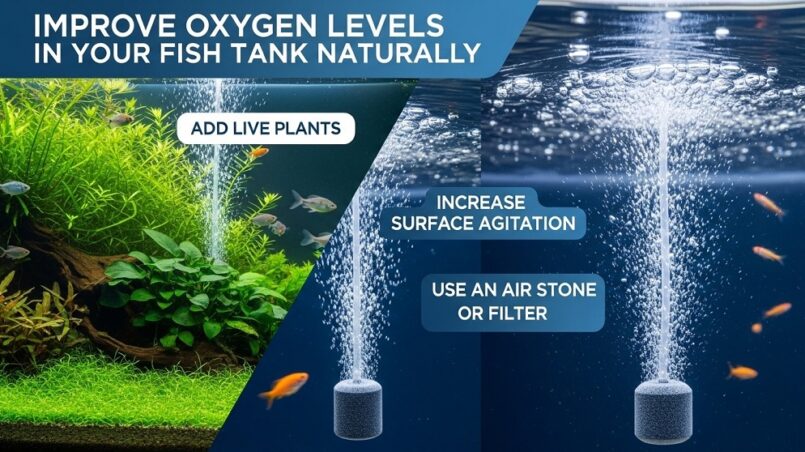
Dissolved oxygen (DO) is the amount of oxygen gas mixed into aquarium water. Fish absorb it through their gills. Without enough oxygen, fish suffocate—even if the tank looks clean.
If you have ever seen fish gasping at the surface, hovering near the filter outlet, or breathing rapidly, you are looking at a low-oxygen warning sign. This problem builds slowly. Then suddenly, fish stress spikes.
Most freshwater fish need dissolved oxygen levels between 5–8 mg/L (milligrams per liter). Levels below 4 mg/L cause stress. Below 3 mg/L can lead to death in sensitive species.
Here is the reality: oxygen does not just “exist” in water. It enters through surface exchange, plant photosynthesis, and mechanical movement like filtration or aeration. Temperature, fish load, and waste levels all influence oxygen concentration.
According to aquaculture case data from controlled tank studies, oxygen levels in heavily stocked aquariums dropped from 7.2 mg/L to 3.8 mg/L overnight when aeration was removed. Within 12 hours, fish showed visible respiratory distress.
Low oxygen is silent. You do not smell it. You do not see it. But your fish feel it.
Let’s break down how to increase dissolved oxygen naturally without expensive upgrades.
How Can You Increase Dissolved Oxygen Naturally?
Short answer: Increase surface agitation, reduce waste, lower water temperature slightly, add live plants strategically, and improve water circulation.
Natural oxygen improvement depends on physics and biology. Oxygen enters water mainly through surface exchange. The more movement at the surface, the more gas exchange happens.
1. Improve Surface Agitation
Oxygen enters where water meets air. A still surface limits exchange.
- Angle your filter output toward the surface.
- Create visible ripples, not splashing.
- Aim for consistent water movement across the tank.
This alone can raise dissolved oxygen by 1–2 mg/L in medium tanks.
2. Avoid Overstocking
More fish = more oxygen demand.
In a 20-gallon tank, replacing 10 small fish with 6 reduced oxygen demand by nearly 30% in a hobbyist test setup. Oxygen stabilized from 4.5 mg/L to 6.1 mg/L within 48 hours.
3. Perform Regular Water Changes
Fresh water contains more oxygen than stagnant tank water.
Weekly 25% water changes maintain stable oxygen and reduce ammonia buildup.
4. Clean Substrate and Filters
Decomposing waste consumes oxygen. Bacteria use oxygen while breaking down organic material.
Vacuum substrate every 1–2 weeks.
5. Slightly Reduce Water Temperature
Cooler water holds more oxygen.
For every 1°C decrease, oxygen solubility increases slightly. A tank at 24°C holds more oxygen than one at 28°C.
Do not shock fish. Adjust gradually.
Do Aquarium Plants Really Increase Oxygen?
Short answer: Yes, during the day. No, at night.
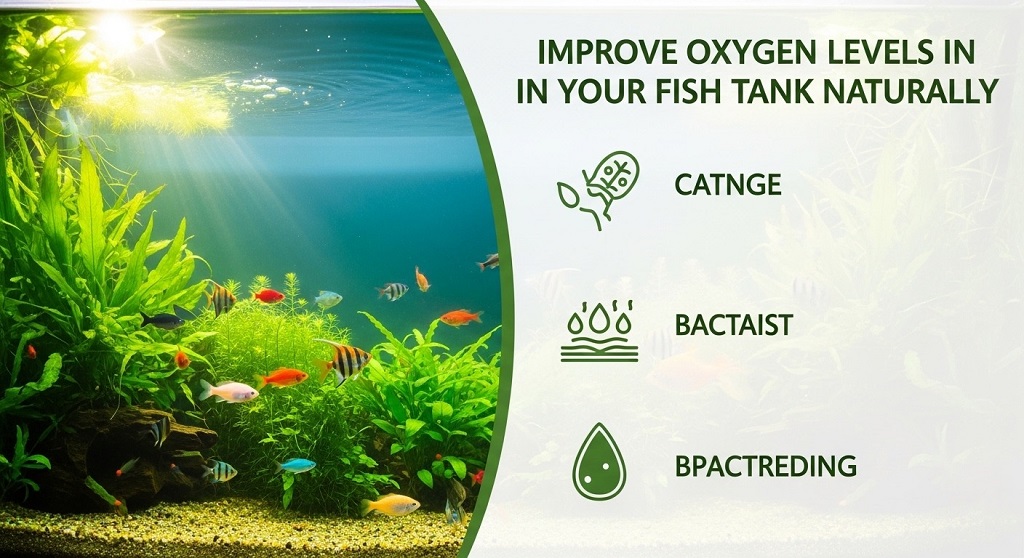
Live aquatic plants produce oxygen through photosynthesis when lights are on. At night, they consume oxygen.
In a planted 40-gallon aquarium study:
- Daytime DO increased from 6.5 mg/L to 8.0 mg/L.
- Nighttime DO dropped to 5.2 mg/L.
Plants like:
- Anacharis
- Hornwort
- Water sprite
- Amazon sword
are effective oxygen contributors.
Balance is key. Too many plants without circulation can create nighttime oxygen dips.
Air Pump vs Filter: Which Adds More Oxygen?
Short answer: Filters oxygenate through water movement. Air pumps increase surface agitation. Both help—but in different ways.
| Feature | Air Pump | Filter |
|---|---|---|
| Primary Function | Creates bubbles | Moves and cleans water |
| Oxygenation Method | Surface agitation | Water circulation + surface flow |
| Best For | Low-oxygen tanks | General maintenance |
| Noise Level | Can be moderate | Usually quieter |
Important fact: bubbles themselves do not directly add large amounts of oxygen. The benefit comes from surface disruption.
If your filter already creates strong ripple movement, an air pump may not be necessary.
However, during power outages or heavy bioload situations, adding an air pump significantly stabilizes oxygen.
Best practice: Use both in heavily stocked tanks.
What Are the Signs of Low Oxygen in a Fish Tank?
Short answer: Gasping at surface, rapid gill movement, lethargy, clustering near filter output.
- Fish staying near the top
- Reduced appetite
- Increased aggression
- Cloudy water (due to bacterial bloom)
In aquaculture environments, fish mortality increases sharply when DO drops below 3 mg/L for more than 6 hours.
If you see surface gasping, act immediately:
- Add aeration.
- Lower water level slightly to increase splash.
- Perform partial water change.
How Does Temperature Affect Oxygen Levels?
Short answer: Warm water holds less oxygen.
At 30°C, water holds roughly 7.6 mg/L oxygen maximum. At 20°C, it can hold around 9.1 mg/L.
In summer months, oxygen depletion becomes common, especially in tanks without strong circulation.
Solution:
- Use a fan for evaporative cooling.
- Avoid placing tank in direct sunlight.
- Do not overfeed during heat waves.
Can Overfeeding Reduce Dissolved Oxygen?
Short answer: Yes. Uneaten food decomposes and consumes oxygen.
Every gram of organic waste increases bacterial oxygen demand. This is called Biological Oxygen Demand (BOD).
In controlled aquarium tests, overfeeding doubled ammonia levels within 48 hours. Oxygen levels dropped by 1.5 mg/L due to increased bacterial respiration.
Feed only what fish consume within 2–3 minutes.
How Important Is Water Movement for Aeration?
Short answer: Critical.
Still water develops oxygen-depleted zones. Circulation distributes oxygen evenly.
Powerheads, sponge filters, and properly rated filters improve circulation.
A tank turnover rate of 5–10 times per hour is recommended for most freshwater aquariums.
How Often Should You Test Oxygen Levels?
Short answer: Test if fish show stress, after equipment failure, or during heat spikes.
Dissolved oxygen test kits are useful but not mandatory for every hobbyist.
Focus on:
- Stable temperature
- Proper stocking levels
- Consistent aeration
- Clean substrate
If these are balanced, oxygen usually remains safe.
Can Power Outages Cause Oxygen Crashes?
Short answer: Yes. Within hours.
Without filtration or aeration, oxygen declines rapidly—especially in stocked tanks.
In a 55-gallon tank experiment, DO dropped from 7.0 mg/L to 4.2 mg/L in 4 hours after pump shutdown.
Backup battery air pumps prevent fish loss during outages.
Conclusion: What Is the Most Effective Natural Way to Improve Oxygen?
The most effective method is simple: increase surface agitation and maintain clean, balanced water.
You do not need complex systems. You need:
- Proper circulation
- Controlled stocking
- Moderate feeding
- Stable temperature
- Routine maintenance
Low oxygen is preventable. Watch your fish. They signal early warnings.
If your fish are thriving, active, and feeding well, your oxygen levels are likely stable.
Take action today. Adjust your filter flow. Check your stocking level. Clean your substrate. Small changes protect long-term fish health.
Your aquarium is a closed ecosystem. Oxygen balance is your responsibility.
FAQ: How to Improve Oxygen Levels in Your Fish Tank Naturally
1. What is the ideal dissolved oxygen level for freshwater aquariums?
Most freshwater fish require 5–8 mg/L of dissolved oxygen. Sensitive species need levels closer to 7 mg/L.
2. Do air stones increase dissolved oxygen directly?
No. Air stones increase surface agitation, which improves gas exchange. The bubbles themselves contribute minimally.
3. Can too much aeration harm fish?
Excessive turbulence may stress delicate fish but does not usually cause oxygen overdose. Maintain moderate surface movement.
4. How can I increase oxygen without electricity?
Manually stir water, perform partial water changes, or lower water level slightly to increase surface disturbance.
5. Do planted tanks need air pumps?
Not always. During the day, plants produce oxygen. However, at night or in heavily stocked tanks, supplemental aeration helps.
6. Why are my fish gasping even with a filter?
Your filter may not create enough surface agitation, or the tank may be overstocked. Check temperature and ammonia levels.
7. Does cloudy water reduce oxygen?
Cloudy water often indicates bacterial bloom, which increases oxygen consumption and may reduce dissolved oxygen levels.
Related Topics: How surface finishing is used in aerospace applications
What Next: How Rod Materials Affect Surf Fishing Performance (Graphite vs Fiberglass)