
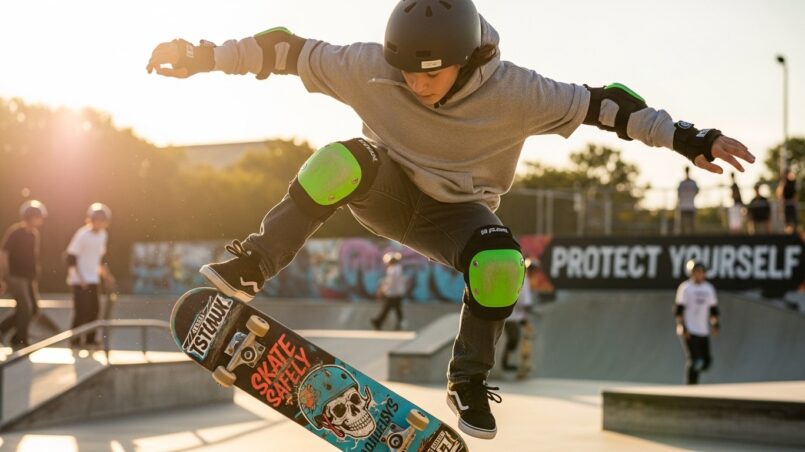
Beginner skate gear like helmets, knee pads, elbow pads, and wrist guards protects the most common impact points during falls. Safety gear does not slow progress. It speeds it up by letting beginners practice without fear.
Skateboarding looks simple until the first fall. Most beginners quit not because skating is hard, but because early injuries break momentum. According to multiple skate injury studies, first-time riders are most likely to fall forward and land on wrists, knees, and elbows. Head injuries, while less frequent, cause the most serious damage.
This guide explains how beginners can skate safely using protective gear that actually works. You will learn what gear matters most, how to choose it, and how to avoid common beginner mistakes. The advice is practical, tested, and based on real-world skating behavior.
If you want to skate longer, learn faster, and avoid unnecessary injuries, this article is for you.
Why Do Beginners Get Injured More Often While Skateboarding?
Beginners get injured more because they lack fall control, board awareness, and muscle memory.
New skaters have not yet developed reflexes that experienced skaters use to roll, slide, or step off the board during loss of balance. When speed changes or the board stops suddenly, beginners often stiffen up. This causes direct impact injuries.
Data from emergency room case studies shows that beginner skaters experience:
- Wrist fractures from forward falls
- Knee and elbow abrasions from sliding impacts
- Concussions from backward falls
Most of these injuries are preventable with proper beginner skate gear. Protective equipment absorbs force, spreads impact, and limits joint movement during falls.
Safe skateboarding tips always start with protection before tricks.
What Protective Gear Do Beginner Skaters Actually Need?
Beginner skaters need a helmet, wrist guards, knee pads, and elbow pads.
Each piece protects a specific injury zone. Skipping one increases risk.
Helmet
A skate helmet protects against skull fractures and brain injury. Beginners fall unpredictably. A helmet is non-negotiable.
Wrist Guards
Wrist guards reduce wrist fractures by limiting backward extension and absorbing shock. Studies show wrist guards reduce serious wrist injury risk by over 50%.
Knee Pads
Knee pads protect the kneecap and allow controlled knee slides instead of direct impact.
Elbow Pads
Elbow pads protect the ulna and reduce skin damage during side falls.
This combination forms the core of beginner skate gear.
How Does Wearing Protective Gear Improve Learning Speed?
Protective gear helps beginners learn faster by reducing fear and increasing practice time.
Fear limits progression. When beginners worry about falling, they hesitate. Hesitation causes instability.
Case studies from beginner skate programs show that students wearing full protective gear:
- Practice longer sessions
- Attempt skills earlier
- Recover faster from mistakes
Safe skateboarding tips often focus on confidence. Gear builds confidence by reducing consequences.
Confidence leads to repetition. Repetition builds skill.
What Should Beginners Look for When Choosing a Skate Helmet?
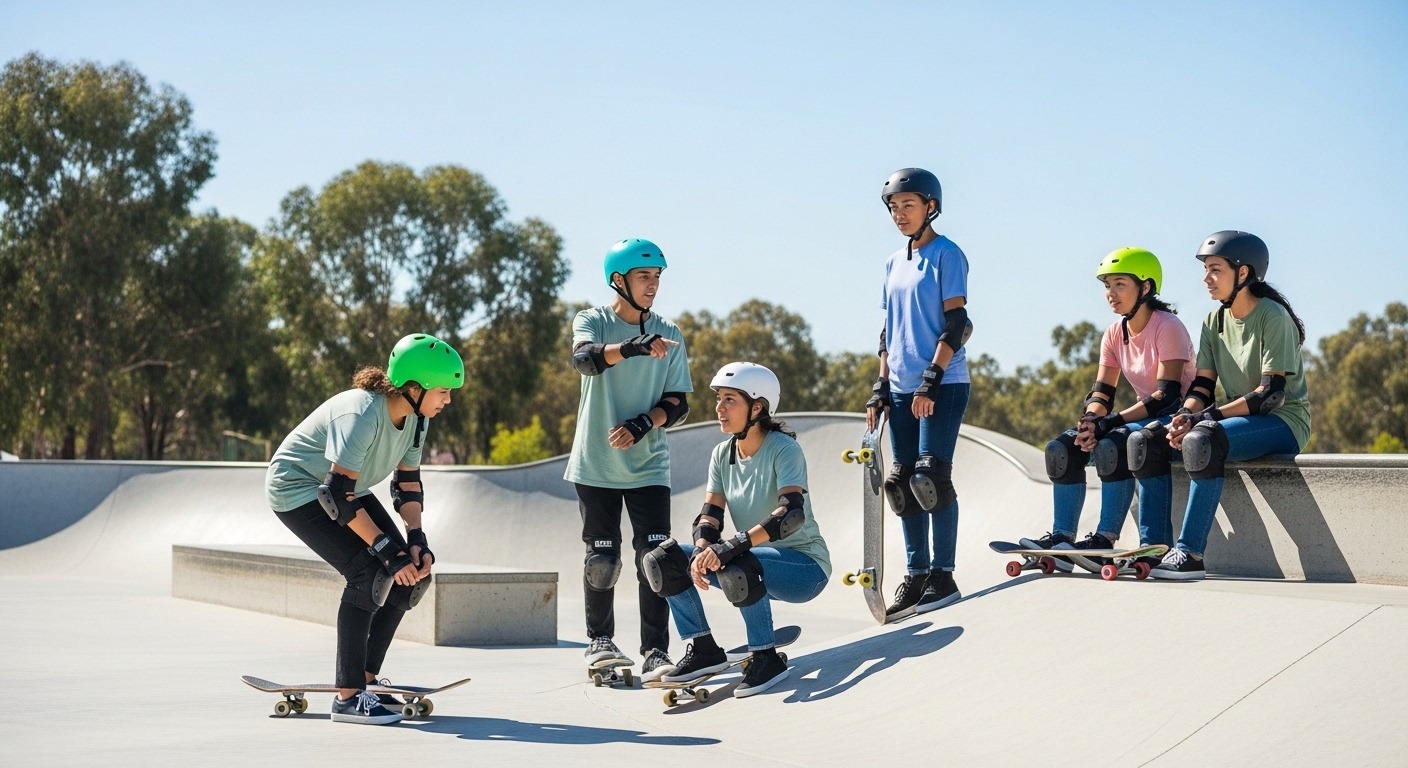
Beginners should choose a certified helmet that fits snugly and is designed for skate impact.
Not all helmets are equal. Bike helmets are designed for single-impact crashes. Skate helmets are designed for multiple low-speed impacts.
Key helmet features for beginners:
- CPSC or ASTM certification
- Hard outer shell
- Multi-impact EPS or EPP foam
- Snug fit without pressure points
A helmet should not wobble when you shake your head. If it moves, it does not protect properly.
Are Wrist Guards More Important Than Knee Pads for Beginners?
Yes. Wrist guards are often more important because wrist injuries are the most common beginner skate injury.
Beginners instinctively put their hands out during falls. This transfers body weight directly into the wrists.
Clinical data shows wrist injuries account for a large percentage of skateboarding ER visits among beginners.
Wrist guards:
- Limit wrist extension
- Distribute impact force
- Prevent fractures and sprains
Knee pads are still critical, but wrist protection should never be skipped.
How Should Beginner Skate Pads Fit for Maximum Safety?
Skate pads should fit snugly without restricting movement or circulation.
Pads that are too loose shift during falls. Pads that are too tight reduce blood flow and comfort.
Proper pad fit guidelines:
- No sliding during movement
- Full joint coverage
- Secure straps without pinching
Beginners should test pads by bending joints fully. If movement feels restricted, adjust sizing.
Can Cheap Beginner Skate Gear Still Be Safe?
Yes, affordable beginner skate gear can be safe if it meets certification standards.
Price does not always equal protection. Certification matters more than brand.
When buying budget gear, check for:
- Impact-rated materials
- Secure fastening systems
- Verified safety certifications
Many beginner-focused brands produce reliable gear at lower cost because they target entry-level skaters.
What Are the Most Common Beginner Mistakes With Protective Gear?
The most common mistakes are skipping gear, wearing poor-fitting equipment, and removing gear too early.
Beginners often stop wearing pads after a few weeks. This is when injury risk increases.
Other mistakes include:
- Loose wrist guards
- Unbuckled helmets
- Worn-out padding
Safe skateboarding tips emphasize consistency. Gear only works if worn correctly every session.
How Does Protective Gear Reduce Long-Term Injury Risk?
Protective gear reduces both acute injuries and long-term joint damage.
Repeated minor impacts without protection can cause chronic pain over time.
Protective gear:
- Reduces inflammation from repeated falls
- Prevents joint instability
- Preserves confidence after crashes
Long-term skating health starts with beginner habits.
Conclusion: How Can You Start Skating Safely Today?
Skating safely starts with wearing the right beginner skate gear every time you ride.
Falls are part of learning. Injuries do not have to be.
Beginner skaters who invest in proper protective gear learn faster, skate longer, and enjoy the process more. Helmets protect your future. Wrist guards protect your ability to practice tomorrow. Pads protect confidence.
Safe skateboarding tips are not about fear. They are about freedom. When you remove injury risk, skating becomes fun again.
CTA: Before your next session, check your gear. Upgrade what is missing. Commit to skating safely and consistently. Your progress depends on it.
Frequently Asked Questions About Beginner Skate Gear
Do beginners really need full protective gear?
Yes. Beginners fall more often and unpredictably. Full protective gear reduces injury risk significantly.
How long should beginners wear protective gear?
Beginners should wear gear until they can control falls and exits consistently. Many experienced skaters still wear helmets.
Is skateboarding safe for kids with proper gear?
Yes. Studies show injury rates drop sharply when kids wear helmets and wrist guards.
Can I skate without pads if I skate slowly?
No. Most beginner injuries happen at low speed during balance loss.
How often should I replace skate protective gear?
Replace gear when padding compresses, straps loosen, or shells crack.
Are wrist guards allowed at skateparks?
Yes. Most skateparks encourage protective gear, especially for beginners.
Related Topics: How Maximum Cushioning Running Shoes Reduce Impact and Improve Comfort
What Next: How Rod Materials Affect Surf Fishing Performance (Graphite vs Fiberglass)