
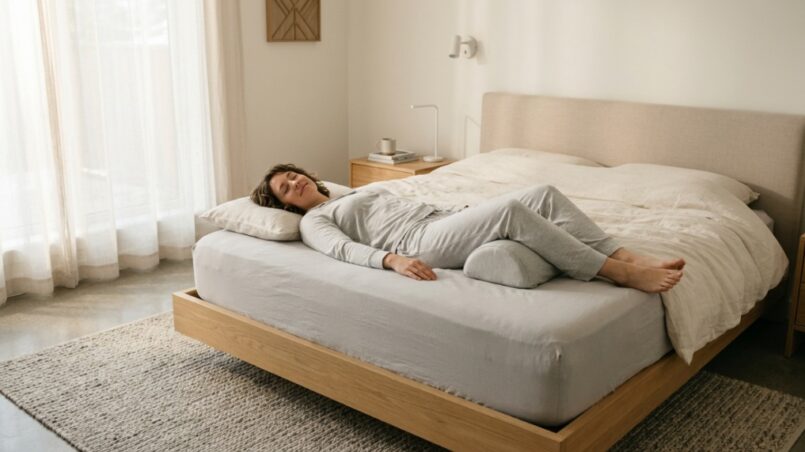
You wake up with a stiff neck, a sore lower back, or a nagging headache that follows you to the coffee pot. You slept eight hours, yet you feel like you wrestled a bear all night.
Chances are, your sleeping posture is the culprit. The way you position your body during those seven to nine hours directly impacts your spinal alignment, muscle recovery, and overall health. Improving your sleeping posture doesn’t require expensive gadgets or drastic lifestyle changes—it starts with understanding how your body rests and choosing the right support, such as a quality sleep posture pillow, to keep your spine neutral. This guide walks you through natural, effective methods to fix your sleep position for good.
What is the Ideal Sleeping Posture for Spinal Health?
The ideal sleeping posture keeps your spine in a neutral alignment, meaning your ears, shoulders, hips, knees, and ankles form a straight line when viewed from the side. This position minimizes pressure points and allows your muscles to fully relax during deep sleep.
For most people, sleeping on your back is the gold standard for spinal health. It distributes your body weight evenly across the mattress, preventing unnatural curves in the neck and lower back. Side sleeping, particularly on your left side, is a close second and is often recommended for reducing acid reflux and snoring. Stomach sleeping is generally the least ideal posture because it forces your neck to twist to one side for hours, straining the cervical spine and compressing your lower back.
To achieve neutral alignment, your mattress and pillow must fill the gaps between your body and the sleeping surface. A common mistake is using a pillow that is too high or too flat, which forces your spine out of alignment. If you sleep on your side, your pillow should be thick enough to keep your head level with your shoulders. Back sleepers need a thinner pillow that supports the natural curve of the neck without pushing the head forward.
Why Does Poor Sleep Posture Cause Pain and Discomfort?
Poor sleep posture forces your muscles, ligaments, and joints to work overtime while you should be resting. Over hours of uninterrupted pressure, this can lead to chronic pain, reduced circulation, and even nerve impingements.
When your spine is misaligned during sleep, the supporting muscles cannot fully relax. Instead, they contract to stabilize the unnatural position. This sustained tension often results in morning stiffness, tension headaches, and sharp pain in the neck or lower back. Additionally, poor posture can compress discs in your spine, reducing their ability to rehydrate and repair overnight. Over weeks and months, this can accelerate disc degeneration and contribute to conditions like sciatica.
Consider the specific strain on your neck. If you sleep on your stomach, your head is rotated 45 to 90 degrees for hours. This can stretch the nerves and muscles on one side of your neck while compressing the other, leading to cervicogenic headaches and restricted range of motion. Your body is designed to recover during sleep, not to maintain a stressful position.
How Can You Naturally Adjust Your Sleeping Position?
You can naturally retrain your body to sleep in a better position using simple physical cues and environmental adjustments, without relying on force or uncomfortable restraints.
Use the Pillow Barrier Method
If you tend to roll onto your stomach or twist your spine, place a long body pillow or a rolled-up blanket alongside your body. This physical barrier prevents you from flopping into a poor position during the night. For side sleepers, hugging a pillow in front of you and placing another behind your back helps maintain a stable, neutral alignment.
Create a Curfew for Screens
Your sleep position is influenced by your muscle memory. Staring at a phone or laptop in bed often leads to “tech neck,” where your head is forward and down. This position carries over into your sleep posture. Committing to a 30-minute screen-free wind-down period helps your neck and shoulders relax into a natural position before you fall asleep.
Implement Progressive Muscle Relaxation
Before you close your eyes, lie on your back and systematically tense and then release each muscle group from your toes to your head. This practice not only relieves built-up tension but also trains your body to recognize and maintain a relaxed, neutral position. When your muscles are loose, they are less likely to pull your spine out of alignment during sleep.
Which Pillow Type Best Supports Natural Sleep Posture?
The best pillow for natural sleep posture is one that keeps your head, neck, and spine aligned based on your dominant sleeping position, and a contoured or wedge-style pillow often outperforms traditional flat options.
| Sleeping Position | Ideal Pillow Type | Key Benefit |
|---|---|---|
| Back sleeper | Medium-loft, contoured pillow | Supports neck curve without lifting head too high |
| Side sleeper | High-loft, firm pillow (or body pillow) | Fills gap between ear and shoulder |
| Stomach sleeper | Very thin, flat pillow (or no pillow) | Minimizes neck rotation |
| Combination sleeper | Adjustable shredded memory foam pillow | Customizable loft for variable positions |
A memory foam wedge pillow is an excellent choice for back sleepers and people who experience acid reflux or snoring. It elevates the upper body gently, maintaining the spine’s natural curve while opening the airways. For side sleepers, a cervical pillow with a deeper contour provides superior support for the shoulder and neck. Avoid oversized, fluffy pillows that push your head into an unnatural angle. Instead, look for materials like memory foam or latex that offer responsive support without collapsing completely under your head’s weight.
How Does Your Mattress Affect Sleeping Posture?
Your mattress is the foundation of your sleep posture. If it is too soft, your hips and shoulders sink out of alignment, creating a hammock effect. If it is too firm, pressure points develop, causing you to toss and turn unconsciously to find a comfortable position.
A medium-firm mattress generally provides the best balance for spinal alignment. It supports heavier body parts like the hips while allowing slight contouring at the shoulders and knees. To test your mattress, lie on your back and slide your hand under the small of your back. If the gap is large and you can slide your hand through easily, the mattress is likely too firm. If you cannot slide your hand in at all, it is too soft. A natural solution for improving a too-soft mattress is to place a firmer mattress topper made of latex or high-density foam underneath your sheets. This adds support without requiring a full replacement.
Can Sleeping on Your Back Reduce Snoring and Acid Reflux?
Yes, sleeping on your back with a slight elevation can significantly reduce snoring and acid reflux, but only if you use proper support to maintain alignment. Flat back sleeping often worsens snoring because the tongue and soft palate collapse into the airway.
For both snoring and reflux, the posture that works best is called “supine with elevation.” Elevating your head and torso by 6 to 8 inches—using a wedge pillow or an adjustable bed base—uses gravity to keep stomach acid down and the airway more open. This is distinct from using multiple flat pillows, which often bend the neck and close the throat. A dedicated wedge provides a uniform slope from the upper back to the head, preserving the neutral curve of the spine. If you want to try natural remedies, elevating the head of your mattress with bed risers or firm cushions placed under the mattress edge can achieve a similar effect.
What Simple Exercises Strengthen Muscles for Better Sleep Posture?
Strengthening your core, back, and neck muscles during the day makes it easier for your body to hold a healthy position at night. Weak muscles are more prone to fatigue and collapse under pressure, leading to poor alignment.
Chin Tucks
This exercise strengthens the deep neck flexors that support the natural curve of your cervical spine. Sit or stand tall, pull your chin straight back (as if making a double chin), and hold for five seconds. Repeat 10 times daily. This trains your head to sit directly over your shoulders, reducing forward head posture that often carries into sleep.
Bridges
Lie on your back with knees bent and feet flat. Lift your hips toward the ceiling, squeezing your glutes and engaging your lower back. Hold for three seconds, then lower. This strengthens the posterior chain, which supports the lower back when you sleep on your side or back.
Cat-Cow Stretch
This dynamic stretch improves spinal mobility and relieves tension in the back and neck. On hands and knees, alternate between arching your back (cow) and rounding it (cat). Perform for one minute before bed. This helps loosen the joints and muscles, allowing you to settle into a more natural position when you lie down.
How Long Does It Take to Correct Sleeping Posture Naturally?
Most people notice a reduction in morning pain within one to two weeks of consistently improving their sleep posture, but forming a new habit typically takes 21 to 66 days. The exact timeline depends on the severity of your previous misalignment and your commitment to daytime posture and exercise.
Muscle memory plays a significant role. Your body has likely held a poor position for years, so it feels “normal.” At first, new postures may feel awkward or even uncomfortable because your muscles and ligaments are being stretched in unfamiliar ways. Give your body time to adapt. If you wake up in your old position, do not panic—simply reposition yourself and go back to sleep. Over time, your body will naturally gravitate toward the healthier alignment as long as your mattress and pillow support it. A useful benchmark is to evaluate your pain levels on a scale of 1 to 10 each morning. When you notice a consistent drop of two points or more over a week, you are on the right track.
Which Sleep Positions Should You Avoid Completely?
You should avoid sleeping on your stomach with your neck twisted to one side and any position that involves tucking your arm under the pillow or body, as these cause severe nerve and joint strain.
Stomach sleeping is the most problematic posture for the majority of adults. It flattens the natural curve of the lower back, often leading to lumbar pain, and forces the neck into extreme rotation. Over time, this can irritate the facet joints and cause chronic headaches. Another position to avoid is the “fetal curl” with hips and knees pulled tightly toward the chest. While side sleeping is good, an overly tight curl compresses the lower back and restricts deep breathing. Try a slightly relaxed side-sleeping position with a pillow between your knees to keep the hips squared and the pelvis neutral. Also avoid sleeping with your arm stretched overhead, as this can compress the brachial plexus nerves and cause numbness or tingling in the hands and arms.
Is It Better to Sleep Without a Pillow for Natural Posture?
Sleeping without a pillow can be beneficial for some stomach sleepers, but it is generally detrimental for back and side sleepers because it causes the head to fall out of alignment with the spine.
For stomach sleepers, a pillow forces the head into a tilted back or overly rotated position. Removing the pillow can flatten the neck and reduce strain, though it may increase lower back extension. If you are a stomach sleeper, try a very thin cushion or simply fold a towel to create minimal lift. For back and side sleepers, going pillowless causes the head to drop backward (back sleepers) or lean down toward the mattress (side sleepers), creating a sharp angle at the neck. This often leads to increased snoring and morning stiffness. The best natural approach is to use the thinnest pillow that still maintains alignment for your position, not to abandon pillows entirely. A quality sleep posture pillow designed with the right loft is far superior to going without.
How to Maintain Good Sleep Posture While Traveling
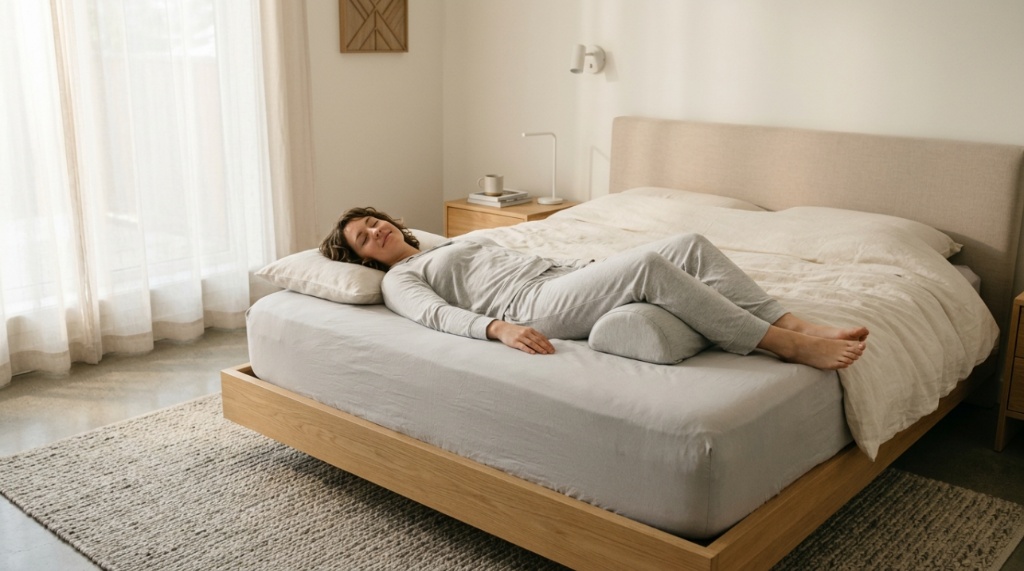
To maintain good sleep posture while traveling, recreate your home sleep setup as closely as possible using portable tools like a travel cervical pillow, a rolled-up towel, and a supportive backpack placed under your knees.
Hotel pillows are notoriously overstuffed or too soft. A simple trick is to fold the pillow in half and tuck it under the mattress pad to adjust the loft. Alternatively, bring your own compressing travel pillow made of memory foam. For cars, trains, or planes, use a U-shaped travel pillow that wraps around the back of your neck, not the front. This prevents your head from dropping forward or sideways during sleep. In a car, place a small lumbar roll behind your lower back to maintain the curve. In a bed, if your hotel mattress is too soft, ask for a firm mattress topper (many hotels can accommodate this request) or place a blanket under the fitted sheet to add support.
Frequently Asked Questions
Can I use a regular pillow to improve my sleep posture?
A regular pillow can work if it matches your needs, but most are too uniform. Side sleepers need a high-loft pillow, back sleepers a medium-loft, and stomach sleepers a very flat option. A dedicated sleep posture pillow is usually more effective because it is designed for specific alignment goals.
How do I know if my pillow is causing poor posture?
If you wake up with a stiff neck, headache, or numbness in your arms, your pillow is likely the cause. A visual test: lie in your normal sleep position and have someone check if your head is aligned with your spine. If it points up, down, or to the side, your pillow is too high or too low.
Does sleeping on my side cause wrinkles or shoulder pain?
Side sleeping can compress the side of your face, potentially contributing to sleep wrinkles over time. Using a smooth silk or satin pillowcase reduces friction. Shoulder pain often indicates your pillow is too low, causing the shoulder to roll forward. A higher pillow supports the head and prevents shoulder collapse.
Can sleeping posture affect my breathing?
Yes. Sleeping on your back without elevation can cause the tongue to collapse into the airway, worsening snoring and sleep apnea. Side sleeping opens the airway and is the preferred position for people with respiratory issues. A wedge pillow can combine the benefits of back sleeping with improved breathing.
What is the best sleeping position for lower back pain?
Sleeping on your back with a pillow under your knees is the best position for lower back pain. This maintains the natural curve of the lumbar spine and relieves pressure on the discs. Side sleeping with a pillow between your knees is also excellent for keeping the pelvis neutral.
Is it normal to feel sore after changing sleep posture?
Mild soreness for the first few days is normal as your muscles and joints adjust to a new alignment. This is called “postural adaptation.” If the pain is sharp or persists beyond a week, check that your pillow height and mattress firmness are appropriate for your new position.
Can I train myself to stop sleeping on my stomach?
Yes, you can retrain your body by using the pillow barrier method. Place a body pillow on one side of your body and a rolled blanket on the other to prevent rolling onto your stomach. Be consistent for two to three weeks, and your body will naturally adopt a side or back position.
While mastering your own nighttime alignment is essential for long-term health, establishing safe and comfortable sleep setups for the youngest members of your family is just as critical. If you have a little one at home, check out these Five Things To Know Before Buying A New Baby Sleeping Bag to ensure they sleep safely through the night.
Conclusion
Improving your sleeping posture naturally is one of the most effective ways to reduce chronic pain, increase daytime energy, and support long-term spinal health. It does not require an expensive mattress overhaul or painful habits. By understanding your ideal alignment, choosing the right pillow and mattress support, and incorporating simple daily exercises, you can retrain your body to rest in a position that heals rather than harms. Start with one change tonight—adjust your pillow to the correct height or place a pillow between your knees. Small, consistent adjustments lead to real results. Your morning self will thank you for the investment in better rest and a pain-free start to your day.