
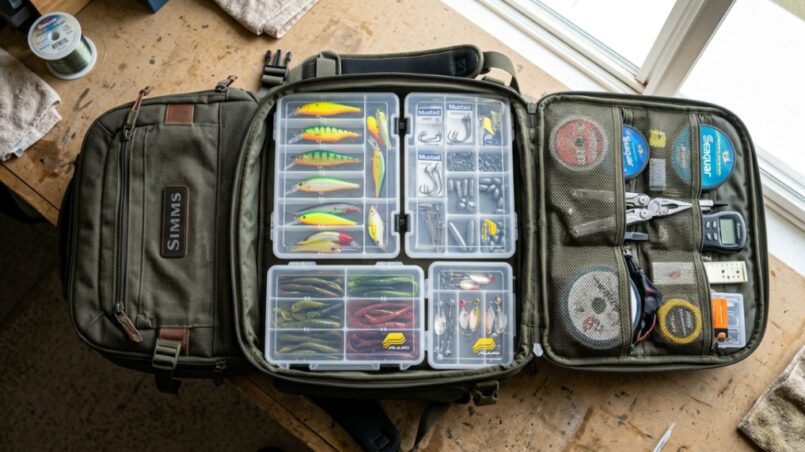
You’ve moved past the casual phase. fish 30, 50, maybe 80+ days a year. Your tackle is worth hundreds, possibly thousands, of dollars. target multiple species across multiple techniques, and your garage looks like a tackle shop stockroom. The problem isn’t owning too much gear. It’s managing it efficiently so every piece performs when called upon.
Serious anglers face a unique storage challenge: volume plus variety plus accessibility, all while maintaining tackle condition season after season. The crankbait that sits in a poorly organized tray all winter comes out with corroded hooks and a sticky finish. The soft plastics stored wrong melt into each other. Leaders develop memory. Expensive fluorocarbon dries out and weakens. Improper storage doesn’t just inconvenience you—it silently destroys your investment.
This guide is for anglers who demand more from their tackle management solutions. Not basic “buy a tackle box” advice, but genuine systems that scale with serious collections, protect premium gear, and put the right tackle in your hands within seconds—whether you’re on a tournament stage or chasing your personal best on a Tuesday afternoon.
What Do Serious Anglers Need from Tackle Management Solutions That Casual Anglers Don’t?
The requirements scale dramatically with fishing frequency and tackle investment:
Capacity without chaos: Owning 200+ lures, dozens of soft plastic varieties, and hundreds of terminal tackle items requires a system — not just a container. Every item needs a designated home that you can locate in under 10 seconds, even at 5:30 AM in the dark.
Protection at scale: When your crankbait collection alone is worth $500+, proper storage isn’t optional. Hooks need separation to prevent dulling. Painted baits need isolation to prevent paint transfer. Premium soft plastics need temperature and chemical protection. Leader material needs flat, UV-free storage.
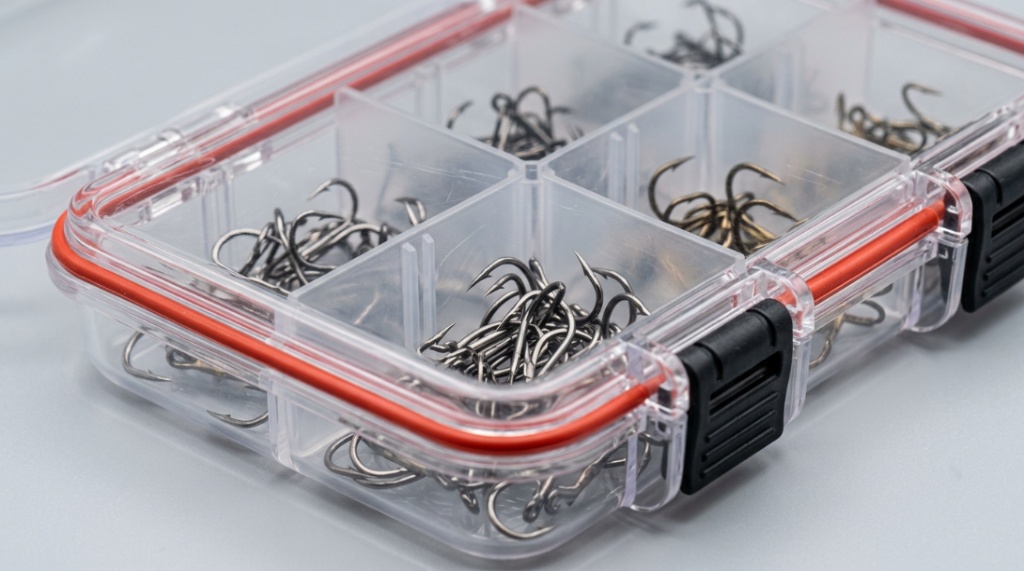
Rapid technique switching: Serious anglers don’t fish one technique all day. They read conditions and adapt — sometimes switching approaches every 30 minutes. The storage system must support technique transitions in under 60 seconds. If your next approach requires digging through three bags, you’re losing fish.
Multi-platform compatibility: Boat on Saturday, kayak on Wednesday, wade fishing on Sunday. Your tackle management solutions need to move between platforms without requiring separate collections for each. Modular, transferable systems save thousands compared to duplicating gear.
Seasonal scalability: Spring calls for different tackle than fall. Tournament pre-fishing demands more variety than a casual outing. Your system should expand and contract easily — adding modules for tournament prep, slimming down for familiar waters.
Which Fishing Tackle Organizers Deliver Professional-Grade Performance?
These are the systems serious anglers trust their collections to:
| System | Type | Key Advantage | Capacity | Weather Protection | Price Range |
|---|---|---|---|---|---|
| Plano Edge Series | Premium utility trays | Rust-prevention tech (Dri-Loc seal + Rustrictor) | 3500/3600/3700 sizes | Waterproof sealed | $15-30/tray |
| Bass Mafia Bait Coffin | Premium bait storage | Individual bait compartments, zero contact | 12-16 baits per coffin | Sealed, UV-resistant | $20-35/unit |
| Shimano Blackmoon System | Bag + tray ecosystem | Full waterproof, modular expansion | Large (5000+ cu in base) | Full waterproof | $120-200 |
| Flambeau Zerust Max | Rust-prevention trays | VCI anti-corrosion integrated | 3003-5007 sizes | Corrosion-proof | $10-22/tray |
| Evolution Drift Series | Tournament-grade bags | Designed for 3600/3700 heavy loads | Extra-large capacity | Water-resistant 1680D | $80-140 |
Best for Hook/Tackle Protection: Plano Edge Series
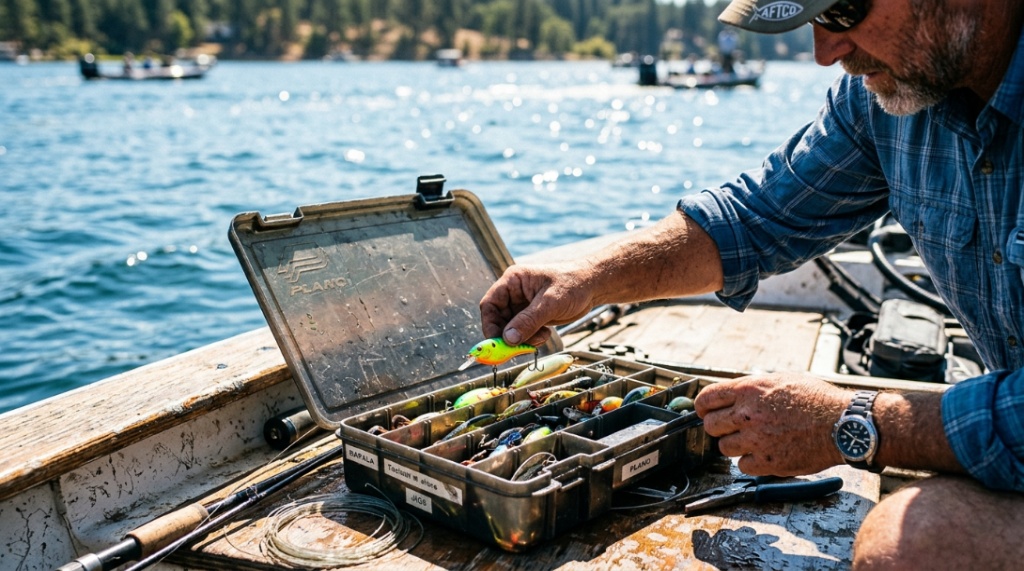
The Edge system uses Dri-Loc gaskets that create a waterproof seal when closed, combined with Rustrictor rust-prevention technology built into the plastic itself. Hooks stored in Edge trays show zero corrosion after months — even in saltwater environments. For serious anglers investing in premium hooks ($2-5 each), this protection pays for itself within a single season.
The divider system uses deeper channels that prevent items from shifting during transport. Labels are waterproof and UV-resistant. Available in 3500 (compact), 3600 (standard), and 3700 (large) to match any bag system.
Best for Premium Hard Baits: Bass Mafia Bait Coffin
When individual crankbaits cost $8-15, you don’t want them clanging against each other in a communal tray. The Bait Coffin gives each lure its own padded slot — hooks never touch other baits, paint stays pristine, and every lure is visible without opening smaller compartments. Tournament pros swear by these because condition matters when you’ve dialed in exactly which bait the fish want.
If you want to maximize your catch during your next coastal trip, keeping your terminal gear organized in your box is only half the battle. Knowing how to rig that gear correctly for moving water makes all the difference. Once you have sorted your hooks and weights into your new storage setup, read our step-by-step guide on How to Tie a Fish Finder Rig for Surf Fishing to ensure your bait stays perfectly presented on the ocean floor.
Best Complete System: Shimano Blackmoon
For anglers who want one brand solving the entire storage ecosystem, Blackmoon offers bags, trays, and accessories designed to work together seamlessly. Full waterproof construction at every level, premium zippers and materials, and a modular expansion approach means you start with a base bag and add components as needed.
How Should Serious Anglers Structure Their Overall Tackle System?
Think of your tackle management as a three-tier hierarchy:
Tier 1: Active Fishing (What’s on the water today)
3-6 trays maximum per trip, holding only what’s relevant to today’s species, technique, and conditions. This lives in your primary fishing bag or boat’s quick-access compartment. Everything here should be touchable within 10 seconds of the decision to use it.
Tier 2: Ready Reserve (Packed and prepared, stays in vehicle/garage)
Additional trays organized by technique that can be swapped into Tier 1 as conditions change or trips vary. Stored in secondary bags or organized bins. These are the “Plan B through D” options — ready to deploy but not carried every trip.
Tier 3: Seasonal Archive (Long-term storage)
Off-season tackle, rarely-used specialty items, backup stock, and bulk terminal tackle. Stored in climate-controlled garage space, ideally in sealed containers with rust prevention. Accessed only during seasonal transitions or pre-tournament preparation.
The key principle: each tier exists independently. You never dig through Tier 3 at the boat ramp. You never haul Tier 2 on a kayak. Clear tier separation prevents the chaos that most anglers create by mixing everything together.
What’s the Best Approach for Organizing Expensive Crankbaits and Hard Baits?
Hard baits represent the highest per-unit investment in most tackle collections. Protecting them requires specific approaches:
Individual separation: Treble hooks from one bait scratch paint on adjacent baits. Hook points dull against other hooks. Premium baits ($8-15+) justify individual compartment storage. Bass Mafia Coffins, Plano Edge deep trays with tight dividers, or custom foam inserts provide this protection.
Depth-matched storage: Deep-diving crankbaits have long lips that snap in shallow trays. Square-bills need less depth. Match your tray/compartment depth to bait profile — standard 3600 for most, deep 3600 or 3700 for larger or deep-billed baits.
Color/depth organization: Organize hard baits by running depth and then by color family within each depth. When fish are eating a medium-diver in shad colors, you can locate every option in one compartment rather than searching across multiple trays.
Hook-point-down orientation: Store crankbaits hook-points-down so the painted body faces up and is visible. This protects paint from resting against dividers and lets you identify baits instantly without lifting each one.
How Do Tournament Anglers Organize for Competition Days?
Tournament organization goes beyond everyday fishing. The stakes demand faster access, more contingency options, and zero confusion under pressure:
Pre-practice preparation (1-2 weeks before): Build technique-specific trays based on lake research. Each potential pattern gets its own tray with everything needed — main baits, backup colors, correct hook sizes, appropriate weights, and matching terminal tackle. Typically 6-10 technique trays for practice days.
Practice refinement (3-4 days before): Based on practice results, narrow to 3-4 primary patterns. Rebuild those trays to include only what produced. Remove anything that didn’t get touched. This distillation process ensures tournament-day trays contain only productive options.
Tournament day loadout: 4-6 trays maximum in primary access positions. Two “confidence” trays (proven producers), two “adjustment” trays (subtle variations if conditions change), and 1-2 “Hail Mary” trays (drastically different approaches if primary patterns fail).
Redundancy protocol: Critical baits that are producing have backups immediately accessible. If the fish want a specific crankbait and you lose it, the identical replacement is in the same tray — not in the truck.
What Rust Prevention Technology Matters Most for Tackle Storage?
For serious anglers, especially those fishing saltwater or storing tackle long-term, rust prevention isn’t a luxury — it’s a necessity:
VCI (Volatile Corrosion Inhibitor): A chemical compound that slowly releases protective vapor inside sealed containers. The vapor forms an invisible molecular layer on metal surfaces that blocks oxidation. Flambeau Zerust trays and standalone VCI tabs use this technology. One tab protects for 6-12 months in a sealed tray.
Dri-Loc Seals (Plano Edge): Gasket-sealed tray lids that prevent moisture entry entirely. Combined with Rustrictor (VCI built into the tray plastic itself), this creates a micro-environment where rust simply cannot form. Premium cost but absolute protection.
Silica gel packets: Budget option that absorbs moisture inside containers. Less effective than VCI but still meaningful — especially for long-term storage. Replace packets when they change color (indicating saturation). Cost: essentially free if you save them from product packaging.
Oil-based protectants: Reel oil or corrosion-block sprays applied directly to hooks and metal components. Effective but messy — can transfer to soft plastics and affect action. Best for long-term archive storage, not active-use trays.
How Do You Scale a Tackle System as Your Collection Grows?
Growth is inevitable for serious anglers. Plan for it instead of reacting to it:
- Standardize tray sizes from day one: If everything is 3600 format, expansion means buying more 3600 trays — they fit every bag and compartment you already own. Mixed sizes create fitting headaches forever.
- Buy bag systems with expansion capacity: Choose bags that fit 6 trays when you currently need 4. The extra space prevents premature bag replacement when you inevitably add more tackle.
- Implement the one-in-one-out discipline early: Even serious anglers don’t need unlimited accumulation. When a new technique enters rotation, consciously identify what exits. Sell, trade, or gift tackle you’ve genuinely moved past.
- Build vertical home storage: Shelving that grows upward (adding shelf units) scales better than horizontal expansion (needing more floor space). Garages have finite floor space but often unused vertical space.
- Consider dedicated tackle management software: At 200+ lures, manual tracking fails. Apps like Fishbrain, Tackle Box, or even spreadsheets help track inventory, location, condition, and purchase value. Insurance purposes alone justify this for large collections.
For anglers looking for specific product recommendations suited to building a comprehensive system, this resource on top-rated fishing tackle storage bags and wraps covers options from budget builds to professional-grade setups.
What’s the Real Cost of a Serious Tackle Management System?
Transparency about investment helps anglers budget realistically:
Budget-conscious serious system ($150-250): Standard Plano 3600 trays (10-12 at $5-8 each), a quality bag like Plano Z-Series or Piscifun ($50-70), VCI rust prevention tabs ($15-20), soft bait binder ($20), and basic garage shelving ($30-50). This handles 100-150 lures organized and protected.
Mid-range performance system ($300-500): Plano Edge or Flambeau Zerust trays (10-15 at $15-25 each), premium bag like Evolution or KastKing ($80-120), Bass Mafia coffins for hard baits (3-4 at $25 each), wall-mounted rod storage ($50-80), and seasonal bins ($40-60). Handles 200-300 lures with premium protection.
Tournament/premium system ($600-1000+): Full Plano Edge ecosystem (15-20 trays at $20-30 each), Shimano Blackmoon or equivalent bags ($150-200), Bass Mafia complete coffin set ($100-150), custom boat compartment organizers ($100-200), and digital inventory system. Handles 400+ lures with maximum protection and instant accessibility.
The justification: a well-organized system extends tackle lifespan by 2-3x. Hooks stay sharp longer (no replacement costs), soft plastics maintain integrity (no premature disposal), and expensive hard baits stay in fishable condition for years instead of degrading in one season.
How Often Should Serious Anglers Reorganize Their Tackle Systems?
Maintenance cadence for high-volume anglers:
- After every trip (5 minutes): Return used tackle to correct trays. Replace damaged/lost items on restock list. Dry any moisture-exposed trays before sealing.
- Weekly (15 minutes): Check most-used trays for organization drift. Sharpen or replace dulled hooks. Restock terminal tackle that’s running low.
- Monthly (30 minutes): Full tray-by-tray audit. Check rust prevention status. Rotate seasonal items. Clean bag interiors. Verify leader material condition.
- Seasonal (2-3 hours): Complete system reorganization. Archive off-season tackle. Promote incoming-season gear to Tier 1. Replace worn trays, pads, and bags. Deep clean everything.
- Annual (half day): Full inventory assessment. Purge dead tackle. Evaluate system effectiveness. Upgrade components showing wear. Plan next year’s storage needs based on new species or techniques.
FAQ
Are expensive fishing tackle organizers worth the premium over standard trays?
For serious anglers, yes — measurably. Premium trays with rust prevention (Plano Edge, Flambeau Zerust) eliminate hook replacement costs ($50-100+/year for active anglers), extend hard bait paint life, and the waterproof seals prevent moisture damage that ruins entire trays of tackle. The ROI is typically 6-12 months for anglers fishing 30+ days/year.
How many trays should a serious bass angler own?
A well-rounded serious bass angler typically maintains 12-20 trays covering: crankbaits (2-3 trays by depth), jigs (1-2 trays), soft plastics rigging (2-3 trays), spinnerbaits/chatterbaits (1-2 trays), topwater (1-2 trays), finesse/drop-shot (1-2 trays), terminal tackle (2-3 trays), and seasonal specialty (1-2 trays). Carry 4-6 per trip based on conditions.
Should I store soft plastics in the same trays as hard baits and hooks?
Never. Soft plastic plasticizers chemically react with painted surfaces (destroying finishes) and certain plastic types (warping tackle tray materials). They also absorb oil residues from metal components. Always store soft plastics separately — ideally in their original bags or dedicated binders with non-reactive sleeve material.
What’s the best way to protect expensive crankbaits during transport?
Individual-slot storage (Bass Mafia Coffin or similar) prevents all hook-to-paint and bait-to-bait contact. For budget protection, wrap individual premium baits in small squares of non-woven fabric before placing in standard trays. Never store premium baits loose in communal compartments — one trip equals months of paint damage.
How do professional tournament anglers organize for 3-4 day events?
Separate storage for each competition day isn’t necessary. Instead, they build technique-specific modules during practice, then carry all potential patterns as individual swappable trays. Boat compartments are mapped by technique — front deck holds primary patterns, rear holds alternates. Everything is pre-rigged and ready to deploy within 30 seconds of a pattern decision.
Is there a point where you own too much tackle to organize effectively?
Yes. When you can’t locate a specific bait within 30 seconds, your system has exceeded manageable capacity. The solution isn’t more storage — it’s less tackle. Serious anglers who perform annual purges maintain better organization and, counterintuitively, catch more fish because they use their remaining tackle more skillfully with deeper confidence.
What’s the biggest tackle organization mistake serious anglers make?
Organizing by acquisition instead of by use. Many anglers put new purchases wherever there’s space, creating a system organized by “when I bought it” rather than “when I need it.” Reorganizing by technique, depth, or seasonal pattern takes effort upfront but saves hundreds of hours of searching over a fishing career.