A fish finder rig is a bottom fishing setup that uses a sliding sinker above a swivel and leader, allowing fish to take the bait without feeling heavy resistance. It is one of the most effective bottom fishing rigs for surf fishing because it keeps bait anchored while giving fish freedom to run.
Picture this. You cast far into the surf. The waves push. The current pulls. Your bait drags out of position. Or worse, fish grab it and drop it because they feel tension.
That’s the problem most surf anglers face.
The fish finder rig solves it. The sliding sinker rig design allows the weight to stay put while the line moves freely through the sinker slider. When a fish bites, it doesn’t immediately feel resistance. That split second often means the difference between a missed strike and a solid hook-up.
It’s similar to a Carolina rig for surf, but optimized for longer casts, stronger currents, and larger species like red drum, striped bass, and sharks.
If you want a detailed breakdown of different bottom fishing rigs, you can explore that guide as well.
What Problems Does a Fish Finder Rig Solve in Surf Fishing?
Short answer: It prevents line tension from spooking fish, keeps bait in the strike zone, and handles surf current efficiently.
Let’s break this down using PAS (Problem–Agitate–Solution).
Problem: Fish Feel Resistance and Drop the Bait
When using fixed sinker rigs, fish instantly feel the weight. In pressured waters, species like striped bass and pompano become cautious. According to state fisheries observations in North Carolina surf zones, pressured red drum often mouth bait before committing. Resistance kills the bite.
Agitate: Missed Strikes Mean Lost Opportunity
Surf fishing already limits control. Wind, current, tide shifts, and wave action reduce sensitivity. If your rig adds extra tension, you multiply the problem. Missed strikes increase frustration. You rebait. You recast. Time passes.
Solution: Sliding Sinker System
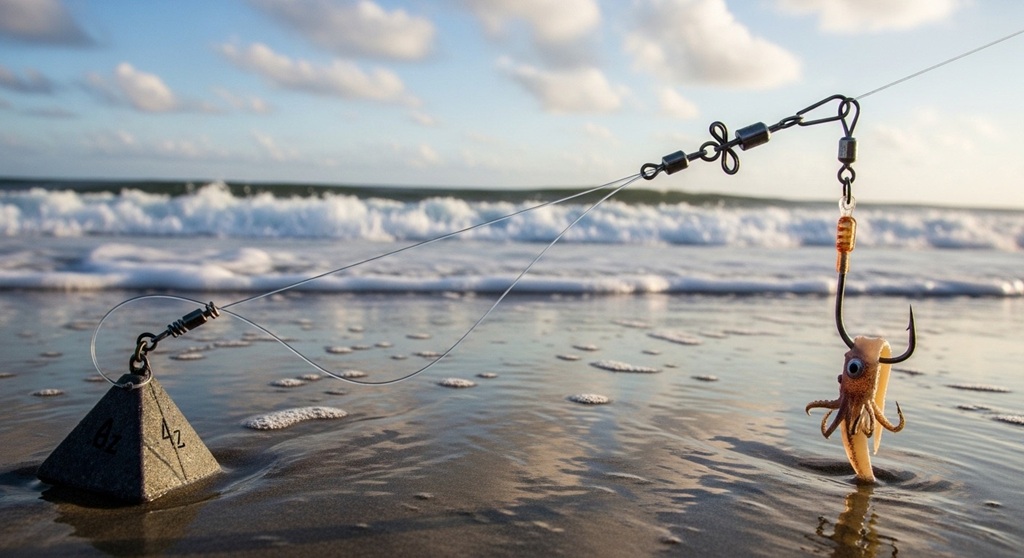
The fish finder rig uses a sliding sinker clip or egg sinker above a barrel swivel. The main line runs through the sinker, not tied to it. When fish pick up bait, the line moves freely. The rod tip signals the bite clearly. Hook sets improve.
In simple terms, it increases bite-to-hookup ratio.
What Do You Need to Tie a Fish Finder Rig?
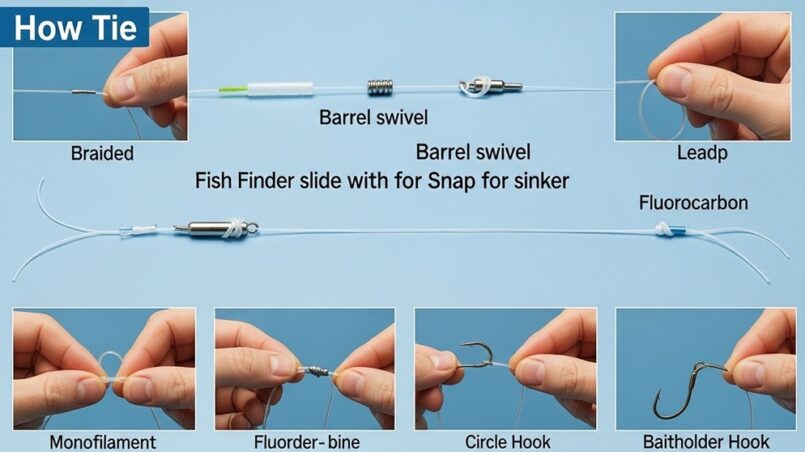
Short answer: Main line, sinker slide, pyramid or sputnik sinker, bead (optional), barrel swivel, leader line, and hook.
- Main line (15–30 lb mono or 30–50 lb braid)
- Sinker slide or egg sinker (2–8 oz depending on surf)
- Plastic bead (protects knot)
- Barrel swivel (size 1/0–3/0)
- Leader line (20–60 lb mono or fluorocarbon)
- Circle hook or J-hook (size depends on target species)
Sinker selection tip:
- 2–3 oz: Calm surf
- 4–5 oz: Moderate current
- 6–8 oz: Heavy surf
Pyramid sinkers anchor in sand. Sputnik sinkers grip stronger current. Choose based on surf conditions.
How Do You Tie a Fish Finder Rig Step by Step?
Short answer: Slide sinker onto main line, tie swivel, attach leader, then tie hook.
Step 1: Slide the Sinker Onto Main Line
Thread your sinker slide or egg sinker directly onto your main line. Ensure the line runs freely through it.
Step 2: Add a Bead (Optional but Recommended)
Place a plastic bead below the sinker. This protects your knot from impact when casting.
Step 3: Tie on a Barrel Swivel
Use a strong knot like a Palomar knot (for braid) or Improved Clinch knot (for mono). Pull tight. Test the knot strength.
Step 4: Attach the Leader
Cut 18–36 inches of leader line. Tie one end to the swivel.
Leader length matters:
- 18–24 inches: Rough surf, strong current
- 24–36 inches: Calm conditions, wary fish
Step 5: Tie the Hook
Use a Snell knot for circle hooks or Improved Clinch for J-hooks. Circle hooks improve survival rates and reduce gut-hooking.
That’s it. You now have a fully functional sliding sinker rig.
How Is a Fish Finder Rig Different From a Carolina Rig for Surf?
Short answer: Both use sliding weights, but the fish finder rig is built heavier for surf conditions.
| Feature | Fish Finder Rig | Carolina Rig for Surf |
|---|---|---|
| Weight Size | 2–8 oz | 1–3 oz |
| Leader Length | 18–36 inches | 12–24 inches |
| Target Species | Striped bass, red drum, sharks | Flounder, smaller surf species |
| Surf Strength | Moderate to heavy | Light to moderate |
Think of the fish finder rig as a reinforced Carolina rig for surf environments.
What Species Can You Catch With a Fish Finder Rig?
Short answer: Striped bass, red drum, bluefish, pompano, sharks, and rays.
This rig works because it keeps bait on the bottom. Many surf species feed along troughs and sandbars. Fisheries surveys along the Atlantic coast show striped bass and red drum primarily strike bait within 1–3 feet of the bottom in surf zones.
Best baits:
- Cut mullet
- Menhaden chunks
- Sand fleas
- Clams
- Squid strips
When Should You Use a Fish Finder Rig Instead of Other Bottom Fishing Rigs?
Short answer: Use it when targeting larger fish in moving water.
Choose this rig when:
- Current is strong
- Fish are wary
- You need long casts
- You’re fishing live or cut bait
A double dropper loop rig works better for smaller species in calm surf. But for power fishing, the fish finder rig dominates.
How Do You Improve Hookup Rates With This Rig?
Short answer: Use circle hooks, match sinker weight to surf, and monitor line tension.
1. Use Circle Hooks
Circle hooks increase corner-of-mouth hookups. NOAA fisheries data shows circle hooks significantly reduce deep hooking in species like striped bass.
2. Match Weight to Conditions
If your sinker drags, fish feel tension. If it’s too heavy, casting distance suffers.
3. Keep Slight Slack
Too tight = fish feel resistance. Too loose = missed bite detection.
Does Leader Material Matter?
Short answer: Yes. Fluorocarbon is less visible; mono offers stretch.
Use fluorocarbon in clear water. Use mono when targeting toothy fish like bluefish. For sharks, use wire leader.
Conclusion: Why Every Surf Angler Should Learn This Rig
The fish finder rig works because it removes resistance. Fish don’t feel the sinker. They commit to the bait. You detect the strike. You land more fish.
Surf fishing already brings variables you can’t control. Tide shifts. Wind changes. Bait movement. This rig gives you control where it matters—presentation.
If you’re serious about improving your surf fishing results, start using this sliding sinker rig consistently. Test leader lengths. Adjust sinker weight. Track your catch rate.
And if you want to compare it with other proven bottom fishing rigs, explore the full guide and refine your setup today.
Your next cast could be your personal best. Tie it right.
FAQ: Fish Finder Rig for Surf Fishing
1. How long should the leader be on a fish finder rig?
18–36 inches. Shorter for heavy surf. Longer for calm water and cautious fish.
2. What sinker is best for surf fishing?
Pyramid sinkers for sand anchoring. Sputnik sinkers for strong current. Choose 2–8 oz based on conditions.
3. Can I use braided line with a fish finder rig?
Yes. Use a Palomar knot to tie braid to the swivel. Add a mono or fluorocarbon leader for abrasion resistance.
4. Is a fish finder rig good for sharks?
Yes. Increase leader strength and consider wire leader. Use heavier sinkers and strong circle hooks.
5. What’s the difference between a fish finder rig and a Carolina rig?
The fish finder rig uses heavier components and longer leaders for surf conditions, while Carolina rigs are lighter and often used in calmer water.
6. Do I need a bead above the swivel?
It’s recommended. The bead protects your knot from repeated impact during casting.
Don’t Miss These Articles: How to Pick the Best Saltwater Fishing Rod That Lasts Longer
Up Next: How to Find a Budget-Friendly Label Maker Without Sacrificing Quality