
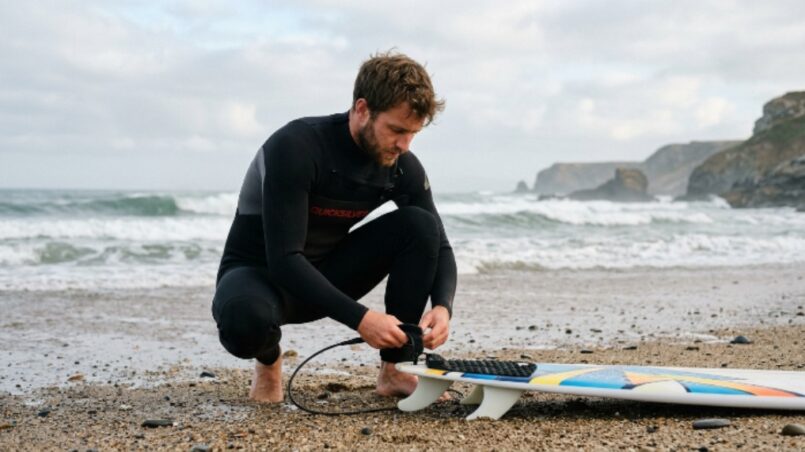
Choosing the right surfboard leash can feel overwhelming, especially if you are new to surfing. There are many options on the market, and each one serves a different purpose. However, once you understand the basics, the decision becomes much easier. This guide walks you through everything you need to know before making a purchase.
Why Your Surfboard Leash Matters More Than You Think
A surfboard leash is not just a safety cord. It is one of the most important pieces of equipment you will attach to your board. It keeps your board close after a wipeout, prevents it from hitting other surfers, and saves you from long swims back to shore.
Many beginner surfers focus only on the board and wetsuit. They overlook the leash entirely. This is a mistake. A poorly chosen leash can snap under pressure, drag excessively in the water, or simply feel uncomfortable around your leg. Therefore, taking time to understand your options before buying is well worth the effort.
The Main Types of Surfboard Leashes
Surfboard leashes come in several main styles. Each style is designed for a specific type of surfing, wave size, or personal preference. Let us look at the most common types.
Straight Leashes
Straight leashes are the standard option for most surfers. They run in a direct line from the cuff on your leg to the plug on your board. These are simple, reliable, and easy to maintain. They work well in a wide variety of conditions, making them a great choice for everyday surfing.
Coiled Leashes
Coiled leashes look like a stretched spring. They stay compact most of the time and only extend fully when your board pulls away from you. Many stand-up paddleboard (SUP) surfers prefer coiled leashes because they stay out of the water and reduce drag. However, some shortboard surfers also enjoy them for cleaner movement in the lineup.
Competition Leashes
Competition leashes are built to be as thin and light as possible. They are designed to minimize drag and distraction during high-performance surfing. If you are competing or chasing peak performance, these leashes are worth considering. On the other hand, they may not hold up as well in heavy surf.
Ankle vs Calf Leash: Choosing the Right Attachment Point
One of the biggest decisions you will make is where to attach the leash to your leg. The two main options are the ankle and the calf. Understanding the difference between an ankle vs calf leash is key to finding comfort and control in the water.
An ankle leash attaches just above your ankle. This is the most popular choice among surfers of all levels. It sits low on the leg, feels secure, and is easy to put on and take off. Most shortboard and longboard surfers default to ankle attachment without thinking twice.
A calf leash, however, attaches slightly higher up the leg, just below the knee. This placement keeps the leash cord away from your feet entirely. For surfers who do a lot of footwork, like longboarders who walk up and down the board, this can make a big difference. It reduces the chance of stepping on the cord or getting tangled during nose rides.
Additionally, some surfers find calf leashes more comfortable for long sessions. The higher placement distributes pressure differently, which can reduce fatigue around the ankle joint. However, it may feel unfamiliar at first if you are used to ankle attachment.
Ultimately, trying both styles is the best way to decide. Many surf shops will let you test the fit before buying.
Understanding Leash Thickness and Why It Matters
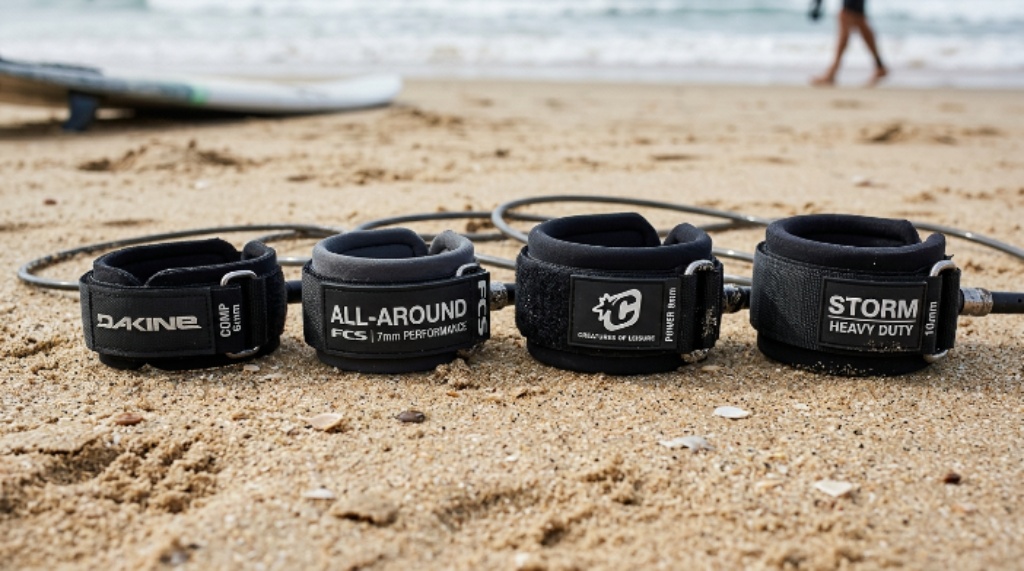
Leash thickness is another factor that directly affects performance and durability. The thickness of a leash is measured in millimeters, and it plays a major role in how well the leash handles different wave sizes.
Thinner leashes create less drag in the water. They are lighter and more flexible, which makes them popular for small to medium waves and performance surfing. However, thinner cords can snap in heavy surf or during powerful wipeouts. Therefore, they are not the best choice for big wave sessions.
Thicker leashes are stronger and more resistant to snapping. They are better suited for larger, more powerful waves. The trade-off is that they add a bit more drag and can feel heavier on the leg. Despite this, the added security is well worth it when the waves are overhead or bigger.
Here is a simple breakdown to guide your decision:
- 4mm to 5mm leash: Best for small waves, beginners, and light conditions
- 6mm leash: Ideal for everyday surfing in moderate conditions
- 7mm to 8mm leash: Recommended for overhead waves and powerful surf
- 9mm and above: Designed for big wave surfing and heavy conditions
Matching leash thickness to the size of the waves you surf is a smart habit to develop. It keeps you safe and extends the life of your equipment.
Leash Length: Matching It to Your Board
Leash length is just as important as thickness. The general rule is simple: your leash should be roughly the same length as your surfboard, or slightly shorter.
For shortboards in the five to seven foot range, a leash of similar length works well. It keeps the board close without getting tangled. For longboards of nine feet or more, a longer leash in the eight to nine foot range is more appropriate.
Using a leash that is too short can cause the board to snap back at you during a wipeout. This is dangerous. On the other hand, a leash that is too long creates extra slack, which increases drag and reduces control. Therefore, matching the length to your board is one of the easiest ways to improve your setup.
The Cuff and Rail Saver: Small Details That Matter
Two small components of a leash deserve special attention: the cuff and the rail saver.
The cuff is the part that wraps around your leg. A comfortable, padded cuff makes a long session feel much better. Look for cuffs with neoprene padding and a secure velcro closure. A loose cuff can spin and chafe, which becomes painful quickly.
The rail saver is the wide, flat section of the leash that connects to the board’s plug. Its job is to protect the rail of your board from damage when the leash pulls tight. Without a good rail saver, the cord can dig into the edge of your board over time, causing dents or cracks. Always check that the rail saver is wide enough and made from durable material.
Tips for Caring for Your Leash
A quality leash can last a long time if you care for it properly. After every session, rinse it with fresh water to remove salt and sand. Salt buildup weakens the cord over time. Additionally, avoid leaving your leash in direct sunlight for extended periods. UV rays break down the urethane material faster than most surfers realize.
Inspect your leash regularly for signs of wear. Look for fraying near the cuff or swivel connections. If the cord feels stiff, brittle, or shows any cracks, replace it immediately. A broken leash in big surf is a serious hazard.
Conclusion
Choosing the right surfboard leash is simpler once you know what to look for. Start by thinking about the waves you surf most often and the length of your board. Then consider the ankle vs calf leash question based on your style and comfort. Pay attention to leash thickness, since it directly affects safety in different surf conditions. Do not overlook the small details like cuff padding and the rail saver. Finally, care for your leash after every session to make it last. With these points in mind, you can walk into any surf shop with confidence and choose a leash that truly fits your surfing life.
Frequently Asked Questions
What is the difference between an ankle vs calf leash for longboarding?
A calf leash attaches below the knee rather than at the ankle. For longboarders, it keeps the cord away from the feet during nose riding and cross-stepping, reducing the risk of tripping on the leash.
How do I choose the right leash thickness for my surfing?
Match leash thickness to wave size. Use a 4mm to 5mm leash for small waves and a 6mm to 7mm leash for moderate surf. For overhead or powerful waves, go with 8mm or thicker to avoid snapping.
Can I use a coiled leash for shortboard surfing?
Yes, some shortboard surfers use coiled leashes. However, straight leashes are more common for shortboarding. Coiled leashes are most popular among stand-up paddleboarders and those who prefer less cord in the water.
How long should my surfboard leash be?
Your leash should match your board length or be slightly shorter. A seven-foot board pairs well with a six to seven foot leash. A nine-foot longboard works best with an eight to nine foot leash.
How often should I replace my surfboard leash?
There is no fixed schedule, but inspect it after every few sessions. Replace it immediately if you notice fraying, stiffness, cracks, or any weakness near the swivel or cuff connections. Most surfers replace their leash at least once per season.
Related Topics:
How to Cut Wood Accurately: Complete Saw Buying Guide
How to Find a Budget-Friendly Label Maker Without Sacrificing Quality