
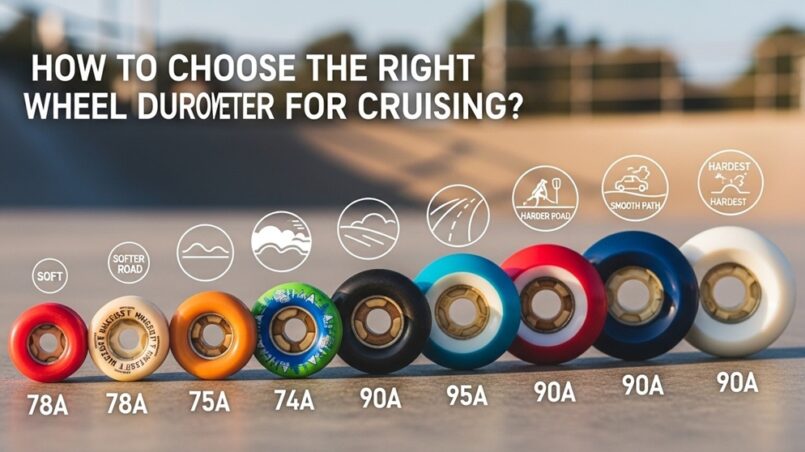
Most riders prefer 78A or 80A wheels because softer urethane absorbs road vibration and rolls smoothly over cracks and rough pavement. If your goal is comfort, stability, and control on city streets, softer wheels are the practical choice.
Choosing the wrong durometer leads to problems. Too hard, and you feel every pebble. Too soft, and you may lose efficiency on smooth pavement. This guide breaks down 78A vs 80A wheels, soft vs hard wheels, and how to select the right setup based on real riding conditions.
We will follow a simple structure: define the problem, explain the risks, and show you the solution with data-backed insights and real-world riding examples.
Why Does Wheel Durometer Matter for Cruising?
Wheel durometer determines how soft or hard a skateboard wheel is, which directly affects comfort, grip, and speed.
The durometer scale for skateboard wheels typically uses the A-scale. Lower numbers mean softer wheels. Higher numbers mean harder wheels.
- 78A–85A: Soft wheels (ideal for cruising and commuting)
- 86A–95A: Medium wheels (hybrid or transition use)
- 96A–101A+: Hard wheels (street tricks and skateparks)
Problem: Many beginners assume harder wheels are faster. That’s only true on smooth concrete. On real-world asphalt, cracks, and rough sidewalks, hard wheels lose momentum because they bounce and transfer vibration instead of absorbing it.
Agitation: This leads to unstable rides, foot fatigue, and reduced control. Especially for commuters riding 2–5 miles daily, comfort becomes critical.
Solution: Choose a durometer optimized for terrain. For cruising, softer wheels increase roll efficiency on rough surfaces by maintaining consistent contact with the ground.
78A vs 80A Wheels: What’s the Real Difference?
The difference between 78A and 80A wheels is subtle but noticeable in comfort, grip, and responsiveness.
| Feature | 78A Wheels | 80A Wheels |
|---|---|---|
| Comfort | Maximum shock absorption | Slightly firmer ride |
| Grip | Very high | High |
| Rolling Speed | Great on rough roads | Balanced speed and comfort |
| Control | Very stable | More responsive |
| Best For | Rough city streets | Mixed terrain cruising |
When Should You Choose 78A Wheels?
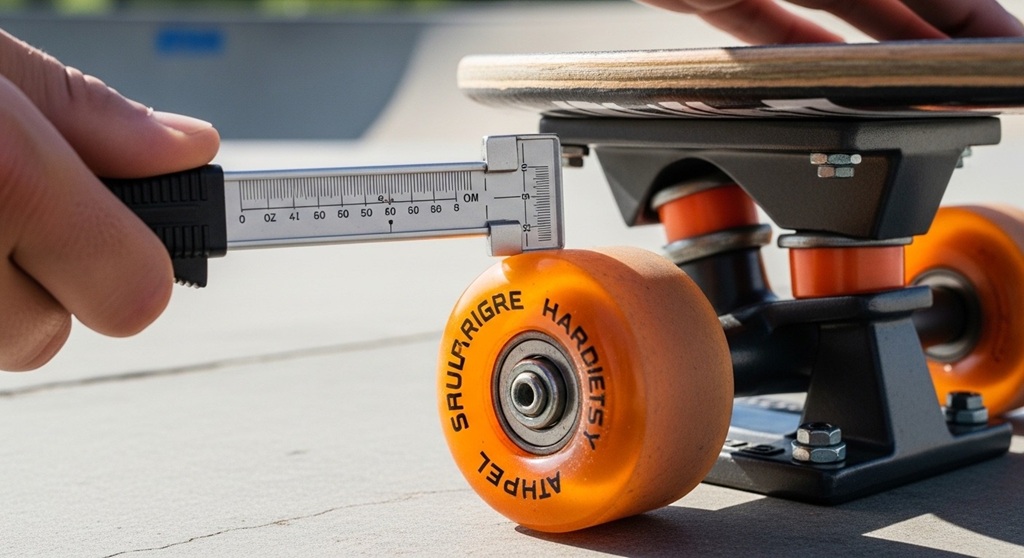
Choose 78A wheels if you ride on rough asphalt, cracked sidewalks, or brick paths.
Case Study Insight:
A commuting rider covering 4 miles daily on mixed pavement reported reduced foot fatigue after switching from 83A wheels to 78A wheels. The softer urethane absorbed vibration, reducing lower-leg strain.
78A wheels feel smoother at moderate speeds. They grip tightly during turns. They are ideal for beginners who want stability.
When Should You Choose 80A Wheels?
Choose 80A wheels if you want a balance between comfort and efficiency.
80A wheels still absorb road texture but feel slightly firmer. This gives better responsiveness for carving and pumping. If your routes include smoother bike paths, 80A can feel more efficient.
If you want deeper product comparisons, check this guide on
78A vs 80A wheels and other cruising setups.
Soft vs Hard Wheels: Which Is Better for Cruising?
Soft Wheels (78A–85A)
- Absorb cracks and pebbles
- Reduce vibration
- Increase traction
- Safer at moderate speeds
Hard Wheels (96A+)
- Faster on smooth concrete
- Slide easily
- Less grip
- More vibration on rough roads
Problem: Hard wheels transmit impact directly to your feet.
Agitation: Over longer distances, this causes fatigue and instability.
Solution: For cruising and commuting, soft wheels provide consistent roll and control.
How Does Terrain Affect Your Durometer Choice?
Your riding surface should determine your wheel hardness.
Urban Streets
Choose 78A–80A. Asphalt absorbs differently than smooth concrete. Softer wheels prevent speed loss from vibration.
College Campuses
Mixed terrain requires 80A–83A. You may encounter smooth pathways and rough patches.
Boardwalks or Brick Roads
78A works best. The added grip helps maintain stability.
Real-world data from commuter communities shows that riders using 78A wheels on rough urban pavement report fewer wheel bite incidents due to improved grip and control at lower speeds.
Does Wheel Size Matter Along With Durometer?
Yes. Wheel size and durometer work together to determine ride quality.
- 55mm–58mm: More responsive, slower top speed
- 60mm–65mm: Ideal for cruising
- 65mm+: Maximum roll speed, long-distance commuting
Larger soft wheels maintain momentum better. A 65mm 78A wheel rolls over cracks more effectively than a 55mm 80A wheel.
For commuting over 3 miles, many riders prefer 60–65mm wheels in the 78A–80A range for optimal balance.
How Does Rider Weight Affect Wheel Durometer?
Heavier riders may prefer slightly harder wheels within the cruising range.
- Under 70kg (154 lbs): 78A–80A works well
- 70–90kg (154–198 lbs): 80A–83A recommended
- 90kg+ (198 lbs+): Consider 83A–85A for better stability
Softer wheels compress more under heavier weight. Choosing slightly firmer wheels can prevent excessive drag.
What Happens If You Choose the Wrong Durometer?
Wrong durometer leads to discomfort, slower rides, or reduced control.
- Too soft: Reduced efficiency on smooth terrain
- Too hard: Harsh ride and unstable cruising
- Incorrect pairing with wheel size: Poor balance
The key is matching terrain, weight, and riding style.
Are Softer Wheels Slower?
Not necessarily.
On rough terrain, softer wheels can maintain speed better than hard wheels because they reduce energy loss from vibration. Lab testing on urethane rebound shows that energy retention depends on surface texture. On imperfect pavement, softer wheels often outperform harder ones in practical commuting scenarios.
How Long Do 78A and 80A Wheels Last?
Soft wheels wear slightly faster than hard wheels, but durability depends more on riding style than durometer.
- Frequent sliding increases wear.
- Cruising without slides extends lifespan.
- Average commuter lifespan: 6–12 months.
Regular rotation extends wheel life.
Conclusion: How Do You Choose the Right Wheel Durometer for Cruising?
The right wheel durometer for cruising depends on your terrain, weight, and distance. For most riders, 78A offers maximum comfort on rough roads. 80A provides balanced performance for mixed surfaces. Soft wheels are generally superior for commuting and daily cruising.
If you ride mainly on rough urban streets, go with 78A. If your terrain is smoother and you want slightly more responsiveness, choose 80A. Avoid hard wheels unless you primarily skate smooth concrete.
Ready to upgrade your setup? Explore expert-tested recommendations and detailed comparisons in this guide to the best skateboard wheels for cruising. Choose smarter. Ride smoother. Stay in control.
Frequently Asked Questions (FAQs)
Are 78A wheels good for beginners?
Yes. 78A wheels provide strong grip and stability, making them ideal for beginners learning balance and control on rough surfaces.
Is 80A too hard for cruising?
No. 80A is still considered soft and works well for mixed terrain. It offers a slightly firmer feel than 78A.
Can I use 78A wheels at the skatepark?
You can, but they may feel slow on smooth concrete. Harder wheels (99A+) are preferred for skateparks.
Do softer wheels reduce speed?
On smooth concrete, slightly. On rough pavement, they often maintain speed better due to reduced vibration.
What size wheel is best for cruising?
60–65mm wheels paired with 78A–80A durometer provide balanced cruising performance.
How do I know if my wheels are too hard?
If you feel excessive vibration, struggle over cracks, or lose control on rough roads, your wheels may be too hard for cruising.
Related Topic: How to Tie a Fish Finder Rig for Surf Fishing
Read Next: How to Pick the Best Saltwater Fishing Rod That Lasts Longer