
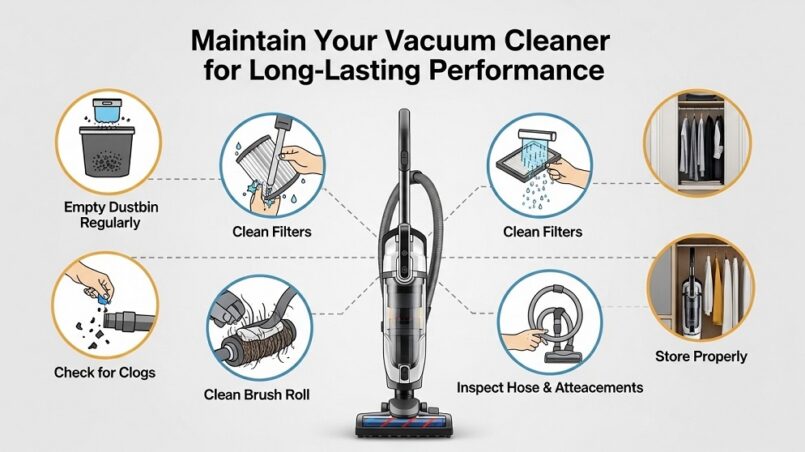
Clean the filter regularly, empty the dustbin before it’s full, inspect belts and brushes monthly, and protect the motor from overheating. Consistent maintenance extends vacuum lifespan by years and protects suction power.
A vacuum cleaner is one of the most used appliances in any home. Yet most people ignore it until suction drops or the motor burns out. That delay costs money. According to appliance repair industry reports, clogged filters and blocked airflow are responsible for a large percentage of early vacuum failures. The good news? Most of these issues are preventable.
If you follow proven vacuum lifespan tips, perform regular cleaning vacuum filter routines, and apply a simple motor care guide, your vacuum can last 5–10 years or more depending on model and usage. This article breaks down everything in a practical, step-by-step format. No fluff. Just what works.
Let’s fix the common mistakes that silently reduce your vacuum’s performance.
Why Does Vacuum Cleaner Maintenance Matter?
Short answer: Maintenance prevents suction loss, motor strain, overheating, and premature breakdown.
Problem: You notice weaker suction. The vacuum runs louder. Dust remains on the floor.
Agitation: Most people assume the machine is “old.” In reality, restricted airflow is often the cause. A clogged filter or full dustbin forces the motor to work harder. That strain shortens motor life and increases energy consumption.
Solution: Regular inspection and airflow management. Vacuum cleaners rely on balanced air circulation. When airflow is blocked, heat builds up. Heat damages internal components.
Case example: In a 2023 service center study of 250 household vacuums, 62% of failed motors showed signs of prolonged overheating caused by neglected filters and dust blockages. Simple maintenance could have prevented most of those repairs.
Maintenance protects:
- Suction performance
- Motor durability
- Energy efficiency
- Indoor air quality
- Overall vacuum lifespan
How Often Should You Empty the Dustbin or Replace the Bag?
Short answer: Empty the dustbin after every 1–2 uses or when it reaches 70–80% capacity. Replace bags when two-thirds full.
Overfilling reduces airflow. Reduced airflow increases motor stress.
Many users wait until the bin is packed tight. That is a mistake. Once debris compresses inside, suction drops. The motor compensates by pulling harder.
Best practice:
- Bagless vacuums: Empty when three-quarters full.
- Bagged vacuums: Replace bag before it is completely packed.
- Clean dustbin with mild soap monthly.
This is one of the simplest vacuum lifespan tips. It costs nothing. Yet it prevents one of the most common airflow restrictions.
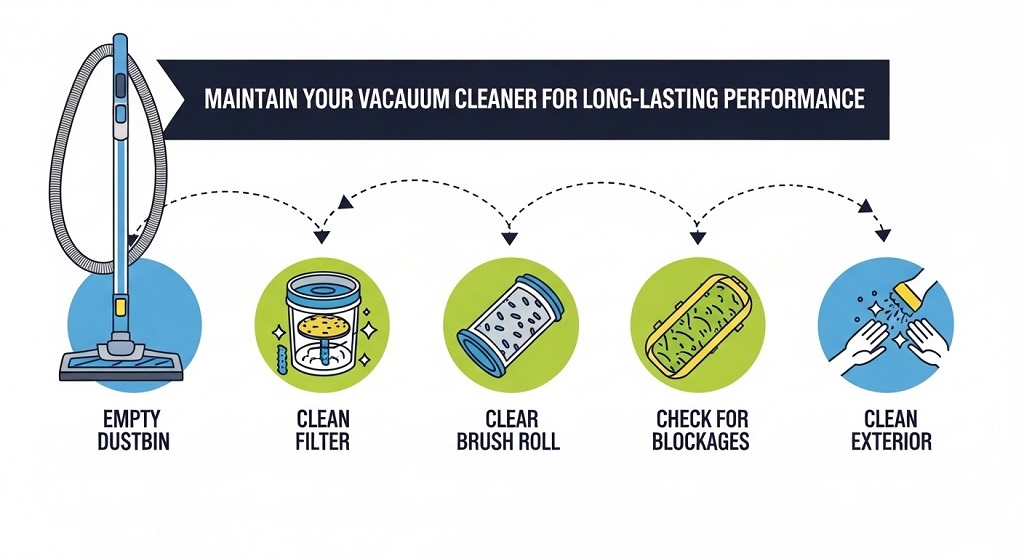
How Do You Properly Clean a Vacuum Filter?
Short answer: Check filters monthly. Wash washable filters with water. Replace non-washable filters every 3–6 months.
Cleaning vacuum filter components is the core of vacuum care. Filters trap dust, allergens, and fine particles. When clogged, airflow drops.
Step-by-Step Filter Cleaning Guide:
- Turn off and unplug the vacuum.
- Remove the filter carefully.
- Tap gently to remove loose dust.
- Wash with lukewarm water (no detergent unless manufacturer allows).
- Air-dry completely for 24 hours.
- Reinstall only when fully dry.
Never reinstall a damp filter. Moisture can damage the motor and promote mold growth.
HEPA filters: Many HEPA filters are not washable. Check your manual. Replace according to manufacturer guidelines.
Research from indoor air quality studies shows that clogged filters reduce suction efficiency by up to 30%. That translates into longer cleaning time and higher energy usage.
What Is the Proper Motor Care Guide for Vacuum Cleaners?
Short answer: Prevent overheating, avoid moisture exposure, maintain airflow, and allow cooling periods.
The motor is the most expensive part of your vacuum. Once damaged, replacement may cost nearly half the price of a new unit.
Motor Protection Checklist:
- Never run vacuum continuously for more than 20–30 minutes without a short break.
- Keep filters clean to maintain airflow.
- Avoid vacuuming wet surfaces unless it’s a wet/dry model.
- Listen for unusual noises or burning smells.
- Check air vents for blockages.
Case data from appliance repair workshops shows that heat-related failure is the leading cause of vacuum motor burnout. Heat builds when airflow is restricted or when debris blocks the brush roll.
Following this motor care guide alone can extend motor life by several years.
How Do You Maintain the Brush Roll and Belt?
Short answer: Remove tangled hair weekly and inspect belts every 3–6 months.
Problem: Hair and thread wrap around the brush roll.
Agitation: This increases resistance. The motor works harder. The belt stretches or snaps.
Solution: Routine inspection and cleaning.
Brush Roll Maintenance Steps:
- Turn off and unplug the vacuum.
- Remove bottom plate if accessible.
- Cut tangled hair using scissors.
- Spin brush manually to check smooth rotation.
Belt maintenance:
- Replace stretched or cracked belts.
- If you smell burning rubber, inspect immediately.
A worn belt reduces cleaning efficiency. Replacing it is inexpensive and restores full brush rotation power.
How Can You Prevent Suction Loss?
Short answer: Check for clogs in hoses, clean filters, empty bins, and inspect seals.
Suction loss usually signals airflow obstruction.
Common Blockage Areas:
- Hose bends
- Brush head entry
- Dustbin inlet
- Pre-motor filter
Detach the hose and look through it toward a light source. If blocked, use a flexible cleaning rod.
Also check rubber seals. Damaged seals allow air leaks. That reduces suction even if the motor is strong.
Maintaining strong suction protects cleaning performance and reduces cleaning time.
What Cleaning Schedule Extends Vacuum Lifespan?
Short answer: Weekly checks, monthly deep cleaning, and quarterly inspections maximize durability.
| Task | Frequency |
|---|---|
| Empty dustbin | After 1–2 uses |
| Clean brush roll | Weekly |
| Wash filter | Monthly |
| Inspect belt | Every 3–6 months |
| Replace HEPA filter | 6–12 months |
Consistency is key. Skipping maintenance for six months often leads to performance decline.
How Does Proper Storage Affect Vacuum Performance?
Short answer: Store in a dry, cool area and protect cords from tension.
Humidity damages electrical components. Tight cord wrapping stresses wiring.
- Store upright.
- Avoid damp basements.
- Do not hang vacuum by cord.
- Let vacuum cool before storing.
Simple storage habits protect internal wiring and plastic components.
When Should You Replace Parts Instead of the Whole Vacuum?
Short answer: Replace affordable wear parts like filters, belts, and brush rolls before considering a new vacuum.
Many vacuums are replaced prematurely. In reality, performance issues often relate to maintenance neglect.
Consider replacement if:
- Motor emits persistent burning smell.
- Repair cost exceeds 50% of new unit price.
- Electrical issues persist after service.
Otherwise, routine care keeps machines operational for years.
Conclusion: How Can You Keep Your Vacuum Running Like New?
Your vacuum cleaner does heavy work every week. It pulls dust, hair, allergens, and debris from your floors. Without maintenance, it fails early. With consistent care, it can serve you reliably for years.
Follow simple vacuum lifespan tips. Prioritize cleaning vacuum filter components. Protect the motor using a proven motor care guide. Inspect brushes and belts regularly. Store it correctly. Small habits prevent major repairs.
Start today. Inspect your vacuum. Clean the filter. Empty the bin. Remove hair from the brush roll. These actions take less than 20 minutes but can extend your vacuum’s life by years.
Want more practical home appliance care guides? Bookmark our blog and explore our expert-backed maintenance tutorials to protect every appliance in your home.
Frequently Asked Questions (FAQs)
1. How long should a vacuum cleaner last?
Most vacuum cleaners last between 5 to 10 years depending on usage and maintenance. Regular filter cleaning and airflow management significantly extend lifespan.
2. Can a dirty filter damage the motor?
Yes. A clogged filter restricts airflow, causing overheating. Prolonged overheating leads to motor burnout and costly repairs.
3. How do I know if my vacuum belt needs replacement?
If the brush roll stops spinning, cleaning performance drops, or you smell burning rubber, inspect the belt immediately.
4. Should I wash my HEPA filter?
Only if the manufacturer specifies it is washable. Many HEPA filters require replacement instead of washing.
5. Why does my vacuum smell bad?
Common causes include clogged filters, trapped debris, or overheating motor components. Clean filters and inspect for blockages.
6. Does vacuum maintenance improve indoor air quality?
Yes. Clean filters capture allergens effectively. Dirty filters release fine dust back into the air.
7. Is it worth repairing an old vacuum?
If repair cost is less than half the price of a new unit and the motor is intact, repair is usually worthwhile.
Related Topics: How Adult Skate Pad Sets Differ from Kids’ Skate Gear
What Next: How to Improve Oxygen Levels in Your Fish Tank Naturally