
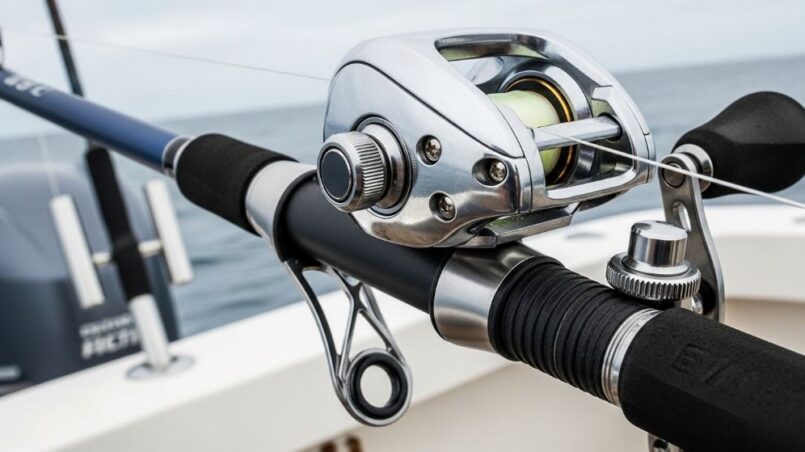
Saltwater fishing presents unique challenges that freshwater anglers never face. The corrosive nature of ocean environments, powerful fish species, and harsh weather conditions demand equipment built to withstand extreme stress. Choosing the right fishing rod isn’t just about catching more fish. It’s about investing in gear that performs reliably season after season.
Many anglers learn this lesson the hard way. They purchase a rod that looks good in the store, only to watch it corrode, crack, or fail during a critical moment on the water. Understanding what makes a saltwater rod durable and selecting one that matches your fishing style will save you money and frustration in the long run.
This comprehensive guide walks you through everything you need to know about selecting saltwater fishing rods that stand the test of time. Whether you’re targeting species near the shore or heading miles offshore, you’ll learn how to evaluate construction quality, materials, and features that matter most.
Understanding the Saltwater Challenge
Saltwater creates a hostile environment for fishing equipment. The salt itself acts as a catalyst for corrosion, attacking metal components and breaking down protective finishes. Additionally, sand acts like sandpaper on guides and reel seats, wearing them down with repeated use.
Sun exposure adds another layer of difficulty. Ultraviolet rays degrade rod blanks and wraps over time, weakening the structural integrity. Combined with the physical stress of fighting large fish, these environmental factors make durability a critical consideration.
Temperature fluctuations between hot sun and cool water cause materials to expand and contract. This cycling can loosen epoxy bonds, crack guides, and separate wraps from the blank. A rod built with inferior materials or poor craftsmanship will show these weaknesses quickly in saltwater conditions.
Materials That Make a Difference
The materials used in rod construction directly impact longevity and performance. Modern manufacturing has given anglers more options than ever, but not all materials are created equal for saltwater use.
Graphite remains the most popular blank material for good reasons. It offers an excellent strength-to-weight ratio and sensitivity. However, quality varies significantly between manufacturers. High-modulus graphite provides exceptional performance but can be more brittle. Mid-modulus graphite offers better durability with slightly less sensitivity.
Fiberglass makes a comeback in certain applications, particularly for rods designed to handle large, powerful fish. While heavier than graphite, fiberglass is nearly indestructible and has a slower, more forgiving action. Many experienced anglers prefer fiberglass for specific techniques where durability outweighs sensitivity.
Composite rods blend graphite and fiberglass, attempting to capture the best qualities of both materials. These rods often provide good sensitivity with enhanced durability. The exact blend ratio determines the rod’s characteristics, so testing different options helps you find the right balance.
Evaluating Guide Quality and Placement
Guides seem like small components, but they play a crucial role in rod performance and longevity. Poor-quality guides corrode quickly, develop grooves that damage fishing line, and eventually fall off the blank.
Stainless steel guides represent the minimum acceptable standard for saltwater use. However, not all stainless steel resists corrosion equally. Higher grades of stainless steel, particularly those used in quality marine applications, hold up better over time.
Ceramic guide inserts protect your line from wear and distribute heat generated by friction during long fights. Hard chrome guides offer excellent durability at a lower price point. Silicon carbide and aluminum oxide inserts provide superior performance but increase the rod’s cost.
Guide placement affects casting distance, accuracy, and the rod’s ability to handle stress. More guides generally distribute load better along the blank, preventing weak points. However, more guides also mean more components that can fail. Quality manufacturers strike a balance between performance and reliability.
The wraps securing guides to the blank need attention too. Multiple thin coats of epoxy create a stronger bond than one thick coat. Look for smooth, bubble-free finishes that extend beyond the thread wraps for maximum protection.
Reel Seat Construction and Durability
The reel seat connects your reel to the rod and must withstand tremendous forces during fights with large fish. This component faces constant exposure to saltwater spray and needs robust construction to last.
Graphite reel seats weigh less and don’t corrode, making them popular for lighter applications. However, they can crack under extreme stress or if dropped on hard surfaces. These work well for moderate fishing conditions but might not be the best choice for heavy-duty situations.
Aluminum reel seats provide superior strength and durability when properly treated. Anodized aluminum resists corrosion better than untreated metal. Premium rods often feature machined aluminum reel seats with multiple coats of protective finish.
The hood design matters as much as the material. Double-locking hoods secure reels more firmly than single-locking designs. Coaster-style reel seats allow precise positioning of your reel but require careful maintenance to prevent corrosion in the sliding mechanism.
Choosing Between Different Fishing Environments
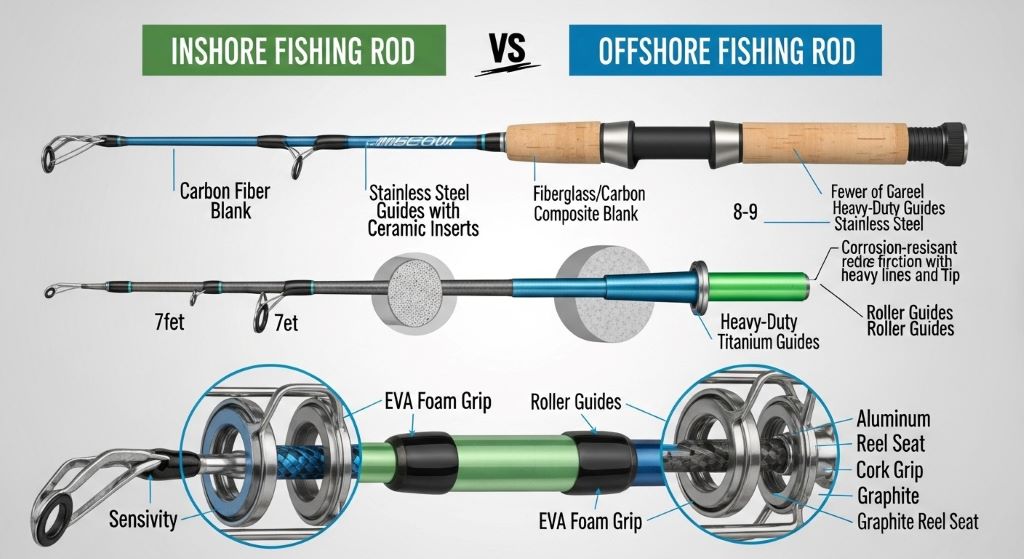
Saltwater fishing splits broadly into two categories, each demanding different rod characteristics. Understanding where you’ll fish most often helps narrow your choices significantly.
Offshore rods need to handle larger fish species in deeper water. These rods typically feature heavier construction, larger guides, and more backbone to fight tuna, marlin, and other pelagic species. The increased stress from trolling, jigging, and fighting powerful fish requires robust materials and construction.
Length for offshore applications usually ranges from six to eight feet. Shorter rods provide more leverage for vertical jigging and fighting fish near the boat. Longer rods help with casting distance and keeping line away from the boat during trolling.
Inshore rods target species in bays, estuaries, and near coastal waters. These rods balance sensitivity with durability since you’re often casting lures or live bait to spotted fish. Inshore applications typically involve lighter tackle and smaller fish than offshore fishing, though species like tarpon and redfish can still test your equipment.
Inshore rod lengths generally run from six and a half to seven and a half feet. This range provides good casting distance while maintaining accuracy. The lighter construction compared to offshore equipment reduces fatigue during a full day of casting.
Action and Power Considerations
Action describes how much of the rod bends under load. Fast action rods bend primarily in the tip section, while slow action rods flex throughout their length. This characteristic affects casting performance, hook-setting ability, and how the rod fights fish.
Fast action rods excel at setting hooks quickly and making accurate casts with lures. The stiff backbone provides more power for moving fish away from structure. However, the limited flex can make them less forgiving with light line or when fish make sudden runs.
Moderate action rods bend further down the blank, creating a more parabolic curve under load. This action works well for live bait fishing and provides a more forgiving feel that helps prevent pulled hooks. The trade-off comes in reduced casting accuracy and slower hook sets.
Power refers to the rod’s resistance to bending. Light power rods bend easily under minimal load, while heavy power rods require significant force to flex. Power selection depends on your target species size and the line weight you plan to use.
Matching action and power to your fishing style prevents frustration and equipment failure. A rod that’s too light for your target species will fail under stress. Conversely, an overly heavy rod reduces sensitivity and makes fishing less enjoyable.
Handle Materials and Ergonomics
The handle is your primary contact point with the rod. Comfort during long fishing sessions matters as much as durability. Handle materials and design affect both fatigue levels and the rod’s longevity.
Cork remains the traditional choice for good reasons. Natural cork provides excellent grip when wet, insulates your hand from temperature extremes, and feels comfortable during extended use. However, cork degrades over time, especially with exposure to sunlight and saltwater.
EVA foam offers superior durability compared to cork. It doesn’t deteriorate with sun exposure and maintains its grip properties indefinitely. Modern EVA foam comes in various densities and textures, some closely mimicking cork’s feel. The downside is slightly less natural feel and potential slipperiness when extremely wet.
Hypalon and rubber grips provide maximum durability and grip in wet conditions. These materials excel in rough weather and don’t degrade with exposure. However, they can become uncomfortably warm in hot weather and lack the traditional aesthetic many anglers prefer.
Handle length affects leverage and comfort. Longer handles provide more leverage for fighting large fish and allow two-handed casting. Shorter handles reduce weight and make the rod more maneuverable in tight spaces. Consider where you fish and how you cast when evaluating handle length.
Protective Coatings and Finishes
The finish on your rod blank provides the first line of defense against corrosion and UV damage. Quality manufacturers apply multiple protective layers to ensure longevity.
Clear coat finishes protect the underlying blank material from moisture and UV rays. Multiple thin coats create better protection than single thick applications. Look for smooth, even finishes without drips or thin spots.
Some manufacturers add UV inhibitors to their finishes, extending the rod’s life in sunny conditions. While this treatment costs more, it pays dividends if you fish frequently in tropical or subtropical climates.
Cosmetic wraps and decorative features should use colorfast threads that resist fading. Metallic threads can corrode in saltwater environments unless properly sealed. Minimalist designs often prove more durable than heavily decorated rods because there are fewer points where moisture can penetrate.
Warranty and Manufacturer Support
A manufacturer’s warranty reveals their confidence in their product. Understanding warranty terms before purchasing can save headaches later.
Lifetime warranties sound impressive but often include significant limitations. Read the fine print to understand what’s covered. Some warranties cover manufacturing defects only, excluding damage from fish, accidents, or normal wear.
Limited warranties typically cover specific time periods and may include provisions for reduced-cost repairs after the initial warranty expires. These warranties often prove more realistic and achievable than lifetime guarantees with extensive exclusions.
Manufacturer reputation matters as much as the written warranty. Companies with established track records in saltwater fishing typically provide better support and honor warranty claims more readily. Research customer experiences with warranty claims before committing to a purchase.
Maintenance Practices That Extend Rod Life
Even the best corrosion resistant rods require proper care to achieve their full lifespan potential. Establishing good maintenance habits takes minimal effort but dramatically extends equipment life.
Rinse your rod with fresh water after every saltwater use. Pay special attention to the reel seat, guides, and any connection points where salt can accumulate. Use a soft brush to gently remove sand and debris from guides.
Dry your rod completely before storing it. Moisture trapped in rod tubes or storage areas promotes corrosion and mildew growth. Leave rod caps slightly loose during storage to allow air circulation.
Inspect your rod regularly for signs of wear or damage. Check guide inserts for grooves or cracks. Examine thread wraps for loose spots or exposed areas. Catching problems early allows for simple repairs before complete failure occurs.
Store rods in a cool, dry place away from direct sunlight. Vertical storage prevents warping that can occur when rods lean against walls. Rod racks or ceiling mounts keep equipment organized and protected.
Testing Rods Before Purchase
Whenever possible, test a rod before buying. While catalog specifications provide useful information, nothing replaces the feel of a rod in your hands.
Visit a tackle shop that allows customers to handle display rods. Grip the handle and make casting motions to evaluate comfort and balance. A well-balanced rod should feel nearly weightless when properly gripped.
Check the rod’s action by gently flexing the tip. The bend should be smooth and progressive without flat spots or sudden changes. Shake the rod gently to feel for any rattles or loose components.
If you have a reel you plan to use, bring it to the store to check the combination. The reel and rod should balance at or just forward of the reel seat for optimal comfort.
Many shops offer demo programs or trial periods. Taking advantage of these programs lets you test equipment in actual fishing conditions before committing to a purchase.
Budget Considerations and Value
Price ranges for saltwater rods span from under fifty dollars to over a thousand. Understanding where your money goes helps you make informed decisions.
Entry-level rods provide acceptable performance for occasional anglers or those new to saltwater fishing. These rods typically use lower-grade materials and simpler construction but can still catch fish. Expect shorter lifespans and fewer features.
Mid-range rods offer the best value for most anglers. These rods use quality materials and construction techniques that provide good durability and performance. Manufacturers target this price point for serious recreational anglers who fish regularly.
Premium rods incorporate the latest materials and technologies. The performance improvements over mid-range options can be subtle for average anglers. However, professionals and dedicated enthusiasts often find the extra investment worthwhile.
Consider your fishing frequency when budgeting. Someone who fishes weekly benefits more from premium equipment than an angler who goes out monthly. The cost per use decreases significantly with more frequent fishing.
Special Considerations for Travel Rods
Travel rods solve storage and transportation challenges for anglers who fish various locations. However, multi-piece designs introduce additional failure points that require careful evaluation.
Ferrule quality determines a travel rod’s reliability. The joints where rod sections connect must fit precisely and lock securely. Loose ferrules cause dead spots in the rod’s action and can separate during use.
Alignment marks help reassemble multi-piece rods correctly. Properly aligned sections ensure guides line up and the rod performs as designed. Quality manufacturers machine precise marks that are easy to see and use.
Travel rods sacrifice some performance compared to one-piece rods. The ferrules add weight and create slight action changes. However, modern manufacturing techniques have minimized these differences. Many anglers can’t detect performance variations between quality travel rods and one-piece designs.
Conclusion
Selecting a saltwater fishing rod that lasts requires understanding the unique challenges of the marine environment. Corrosion resistant rods built with quality materials withstand salt, sun, and stress better than budget alternatives. Whether you’re shopping for offshore rods or inshore rods, evaluating construction quality, materials, and features ensures you invest wisely.
Remember that rod selection depends heavily on your specific fishing situations. Match the rod’s power and action to your target species. Consider the environment where you’ll fish most often. Don’t overlook maintenance practices that extend any rod’s lifespan.
Quality rods cost more upfront but provide better value over time. They perform reliably when you need them, resist corrosion and damage, and often come with manufacturer support that protects your investment. By following the guidelines in this article, you’ll select equipment that serves you well for many seasons of fishing adventures.
Take time to research options, test rods when possible, and purchase from reputable manufacturers. Your fishing success and enjoyment depend significantly on having reliable equipment you can trust. A well-chosen saltwater rod becomes a trusted companion that helps create countless memories on the water.
Frequently Asked Questions
How often should I replace my saltwater fishing rod?
Rod replacement depends on usage frequency and maintenance quality rather than a specific timeline. Well-maintained rods from quality manufacturers can last ten to fifteen years or longer. Replace your rod when you notice structural damage, corroded components, or significant performance degradation. Regular inspections help you catch problems before complete failure occurs.
Can I use a freshwater rod in saltwater if I rinse it thoroughly?
While rinsing helps, freshwater rods aren’t designed for saltwater’s corrosive environment. Components like guides, reel seats, and wraps on freshwater rods typically use materials that corrode quickly in salt. Freshwater rods also generally lack the backbone needed for larger saltwater species. Invest in proper saltwater equipment to avoid disappointment and equipment failure.
What’s more important, rod quality or reel quality?
Both components matter equally for a balanced fishing system. However, a quality rod generally lasts longer than a reel because it has fewer moving parts to fail. Many anglers invest slightly more in rods because they keep them longer. That said, pairing a premium rod with a poor-quality reel creates an unbalanced system that underperforms.
Do I need different rods for different saltwater species?
Dedicated anglers often own multiple rods optimized for specific techniques and species. However, beginners can start with one versatile medium-heavy rod suitable for various inshore or nearshore applications. As you develop preferences and target specific species more frequently, adding specialized rods improves your success and enjoyment.
How do I know if a rod blank has developed cracks or damage?
Flex the rod gently while inspecting the blank closely for any lines, discoloration, or irregularities. Small cracks often appear as hairline fractures in the finish. Run your hand carefully along the blank feeling for rough spots or raised areas. Hold the rod up to light to reveal cracks that might not be visible otherwise. Any suspected damage warrants professional inspection before using the rod again.
Related Topics:
How Rod Materials Affect Surf Fishing Performance (Graphite vs Fiberglass)
Where to Travel in February USA for Uncrowded Ski Alternatives