
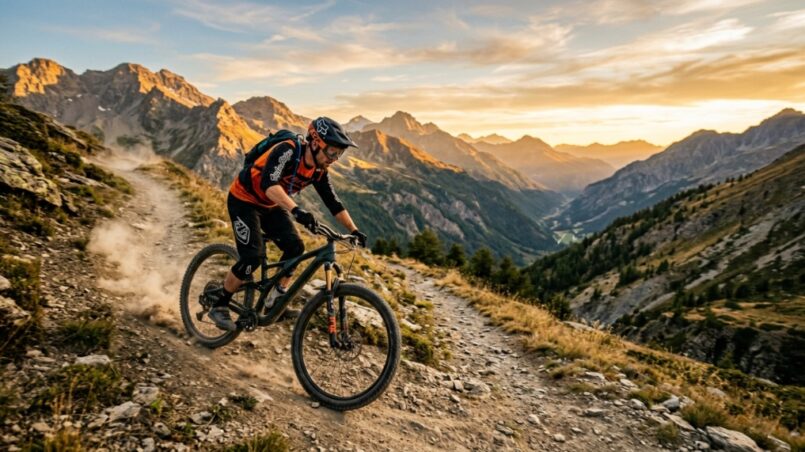
You have made the decision to hit the trails, but now you are staring at a wall of handlebars, suspension forks, and confusing geometry numbers. The problem is clear buying the wrong mountain bike can turn an exciting hobby into a painful, frustrating experience that makes you want to quit before you even start. Whether you are searching for the best mountain bike on the market, or simply trying to understand what your local shop is recommending, you need a clear, honest guide. This article will not just list bikes; it will help you decode your riding style and match it to the perfect machine. Forget the marketing hype and focus on what actually matters for your safety, comfort, and progression. Let us find the bike that fits your legs, your terrain, and your budget.
What Is a Mountain Bike and How Is It Different from a Road Bike?
A mountain bike is a bicycle designed specifically for off-road cycling. It is built to handle rough terrain, steep inclines, and technical descents using features like wide knobby tires, a flat handlebar, and a robust frame. Unlike a road bike, which prioritizes speed on pavement, a mountain bike prioritizes traction, durability, and shock absorption.
The primary visual difference is the tire tread. Mountain bike tires are aggressive, with deep lugs that dig into dirt, mud, and gravel. The frame geometry is also slacker, meaning the rider sits in a more upright position for better control. Road bikes have drop bars and narrow tires, while mountain bikes use flat or riser bars for leverage. If you repeatedly find yourself wanting to cut across the grass or explore a dirt path, you are likely a candidate for a mountain bike rather than a road bike.
Key Components That Define a Mountain Bike
- Suspension: Front suspension (hardtail) or full suspension (dual) absorbs bumps.
- Tires: Typically 26, 27.5, or 29 inches with aggressive tread patterns.
- Drivetrain: Wide gear range for climbing steep hills.
- Brakes: Disc brakes are standard for stopping power in wet or muddy conditions.
Why Does Your Riding Style Dictate the Best Mountain Bike for You?
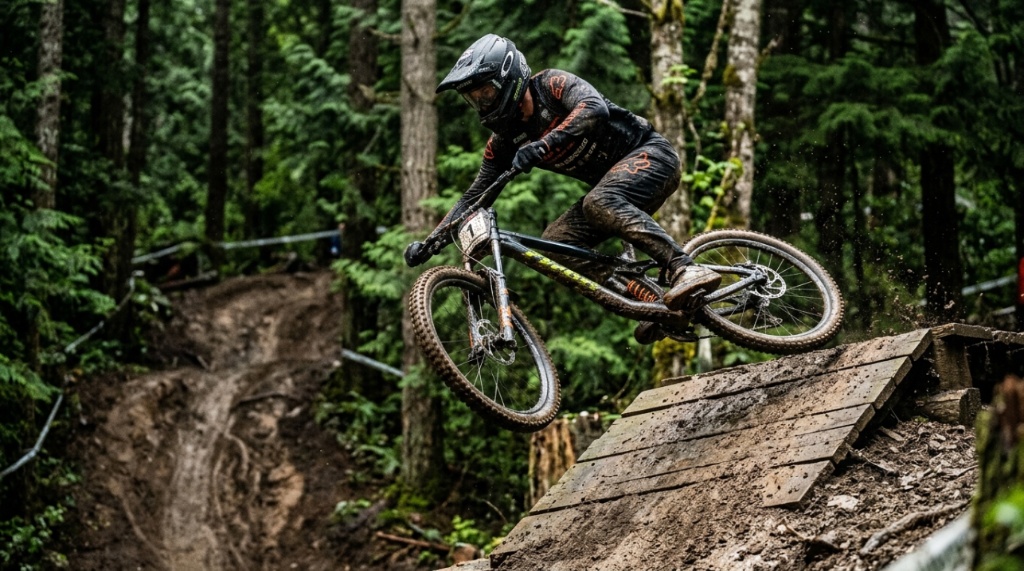
Your riding style dictates the best mountain bike because the geometry, suspension, and wheel size that excel on a smooth, flowing trail will fail miserably on a steep, rocky downhill. Riding style is not just about preference; it is about physics and safety. A bike optimized for cross-country efficiency will be twitchy and unstable at high speeds on a downhill track.
For example, a beginner riding on local fire roads needs a very different bike than an experienced rider hitting jumps in a bike park. If you buy an aggressive downhill bike for casual neighborhood trails, you will find it heavy and sluggish. Conversely, taking a lightweight cross-country bike to a rocky, root-filled trail will result in a jarring ride. Understanding your riding style is the first step in avoiding a costly mistake and ensuring you actually enjoy the ride.
Whether you are hitting high-speed downhill mountain bike trails or just learning the basics of rolling on wheels, safety should always be your top priority. Proper padding and helmets prevent major injuries across all action sports. If you or a family member are looking to branch out into other wheel sports, check out our guide on how to help Beginners Skate Safely With the Right Protective Gear? before stepping onto the pavement.
How to Determine Your Riding Style (The 3-Step Test)
To determine your riding style, you must honestly assess the terrain you will ride most often, your fitness level, and your risk tolerance. Most riders fall into one of five categories: Cross-Country (XC), Trail, All-Mountain, Enduro, or Downhill. You do not need to label yourself perfectly, but you do need to know if you prefer climbing or descending.
- Analyze your local terrain: Are the trails flat and smooth, or steep and rocky?
- Identify your favorite part of the ride: Do you love the climb to the top, or the screaming descent down?
- Assess your budget: More aggressive riding requires more expensive suspension and stronger frames.
Which Type of Suspension is Right for a Mountain Bike for Adults?
For beginner to intermediate adults, a hardtail (front suspension only) is often the best mountain bike choice. Hardtails are lighter, more efficient at climbing, and significantly cheaper to maintain than full-suspension bikes. However, if you are an older adult or have back or neck concerns, a full-suspension bike offers greater comfort and reduces fatigue on rough terrain.
A hardtail bike forces you to learn better line choice because you cannot rely on rear suspension to save you. This builds better skills faster. Full-suspension bikes (dual suspension) allow you to ride faster over rough terrain with less physical strain, but they require more maintenance and cost more. As a rule of thumb: if you are on a budget under $1,500, a hardtail will give you better components than a cheap full-suspension bike.
Pros and Cons of Hardtail vs. Full Suspension
| Feature | Hardtail | Full Suspension |
|---|---|---|
| Climbing Efficiency | Excellent | Good (requires lockout) |
| Cost | Lower | Higher |
| Maintenance | Low | High |
| Comfort on Rough Trails | Poor | Excellent |
| Weight | Lighter | Heavier |
What Wheel Size Should an Adult Choose: 26, 27.5, or 29-Inch?
For most adults, 29-inch wheels are the current standard for the best mountain bike due to their ability to roll over obstacles easily and maintain momentum. However, 27.5-inch wheels are better for shorter riders or those who prefer a playful, maneuverable bike. 26-inch wheels are now generally reserved for budget-friendly models or riders who need a small frame size.
Wheel size directly impacts how the bike handles. 29ers are like monster trucks, rolling over rocks and roots with less effort. They are fantastic for cross-country and trail riding. 27.5 wheels are more agile and easier to whip around corners, making them popular for trail and enduro riding. If you are under 5’6″, you may find 27.5 wheels fit your body better and offer a more confident riding position. Avoid 26-inch wheels unless you are buying a children’s bike or a very specific budget build.
How to Choose the Right Frame Size for a Mountain Bike
Choosing the right frame size is arguably more important than the components. A bike that is too large will be hard to control; a bike that is too small will be uncomfortable and cause back pain. You determine the correct size by measuring your inseam and reaching a reputable brand’s size chart.
- Measure your inseam: Stand against a wall with a book between your legs (as if sitting on a saddle). Measure from the top of the book to the floor.
- Test the standover height: When straddling the bike, you should have 2-4 inches of clearance between the top tube and your body.
- Check reach: When holding the handlebars, your elbows should have a slight bend, and you should not feel stretched out or cramped.
Most bike shops offer test rides. Do not skip this step. A properly sized bike feels like an extension of your body, not a wrestling partner.
Can a Beginner Ride a Full-Suspension Mountain Bike?
Yes, a beginner can ride a full-suspension mountain bike, but it is rarely the wisest investment. Full-suspension bikes are heavier, more complex, and more expensive. For a beginner, a hardtail is the best mountain bike because it teaches you proper technique, is easier to pedal, and allows you to invest in better brakes or a lighter frame.
That said, if you have joint pain, are a heavier rider, or plan to ride very rocky terrain from day one, a full-suspension bike can make the experience more enjoyable. The key is to avoid the cheapest full-suspension bikes on the market, which often use heavy, ineffective suspension that bobs when you pedal. A quality hardtail is almost always better than a cheap full-suspension bike for a true beginner.
Is a Hardtail Mountain Bike Better for Climbing?
Yes, a hardtail mountain bike is generally better for climbing. Because the rear wheel is directly connected to the frame, no energy is lost to suspension bob. Every watt of power you push into the pedals goes directly into moving the bike forward. This makes hardtails faster and more efficient on smooth climbs and fire roads.
On technical climbs with roots and rocks, a full-suspension bike can actually provide better traction because the rear wheel stays in contact with the ground more consistently. However, for the average rider, the efficiency penalty of a full-suspension bike on a climb (often 5-10% energy loss) outweighs the traction benefit. If climbing is your primary focus, the hardtail is the clear winner.
Which Mountain Bike Components Matter Most for Durability?
The components that matter most for durability are the wheels, drivetrain, and brakes. These parts take the most abuse and are the most expensive to replace. A bike with a cheap frame but good wheels will last longer than a bike with a good frame but cheap wheels.
Focus your budget in this order:
- Wheels: Look for tubeless-ready rims and sealed cartridge bearings.
- Drivetrain: A 1x drivetrain (single front chainring) is simpler and more durable than a 2x or 3x.
- Brakes: Hydraulic disc brakes offer significantly better stopping power than mechanical disc brakes.
- Fork: Air forks are lighter and more tunable than cheap coil forks.
Do not be swayed by a flashy paint job or a brand name. The drivetrain and wheels are what keep you moving and stopping.
How Much Should You Spend on a Mountain Bike for Adults?
For a reliable, safe, and enjoyable mountain bike for adults, plan to spend at least $600 to $1,000. This price point gets you a bike with a decent frame, reliable brakes, and a fork that works. Below $500, you enter the “bike-shaped object” territory, where components fail quickly and the bike is heavy and unsafe.
The sweet spot for serious hobbyists is between $1,500 and $3,000. In this range, you get quality suspension, lighter frames, and components that can handle regular trail riding. For competitive or very aggressive riding, budgets often exceed $4,000. The golden rule is to spend the most you are comfortable with, because better components drastically improve the riding experience and resale value.
Where Should You Buy Your First Mountain Bike?
Your first mountain bike should ideally be purchased from a local bike shop (LBS) rather than a big-box store or online-only retailer. A local shop provides professional assembly, free adjustments, and expert advice on sizing. This service is invaluable for a beginner.
However, online brands offer excellent value for money if you are mechanically inclined. If buying online, ensure the seller has a good return policy for sizing issues. Avoid department store bikes from big-box retailers. They are assembled by general staff, use the lowest quality components, and often lack proper safety checks. A bike from a local shop, even if slightly more expensive, will save you money in repairs and frustration.
Whether you are hitting high-speed downhill mountain bike trails or just learning the basics of rolling on wheels, safety should always be your top priority. Proper padding and helmets prevent major injuries across all action sports. If you or a family member are looking to branch out into other wheel sports, check out our guide on how to help Beginners Skate Safely With the Right Protective Gear? before stepping onto the pavement
Frequently Asked Questions
What is the best mountain bike for a complete beginner?
The best mountain bike for a complete beginner is a quality hardtail with 27.5 or 29-inch wheels. Focus on a well-known brand with hydraulic disc brakes and a 1x drivetrain. A budget of $600–$1,000 is ideal for a bike that will last several seasons and not hold you back.
Is it worth buying a cheap mountain bike under $300?
No, it is rarely worth buying a mountain bike under $300. These bikes are heavy, use low-quality components that break easily, and lack proper suspension. They are often unsafe for trail use and will cost more in repairs than the purchase price. Save up for a $600 bike instead.
How often should I replace my mountain bike?
Most riders get 3–5 years of solid use from a mountain bike. The frame can last a decade, but components like the drivetrain, tires, and suspension will need servicing or replacement sooner. If you ride regularly (2–3 times a week), plan on replacing wear items annually.
Can I use a mountain bike for commuting on pavement?
Yes, you can use a mountain bike for commuting, but it will be slower and heavier than a hybrid or road bike. Swapping the knobby tires for slick tires can significantly improve speed and efficiency on pavement. It is a versatile but not optimal choice for pure road riding.
What does “29er” mean on a mountain bike?
“29er” refers to a mountain bike with 29-inch diameter wheels. This wheel size is standard on modern mountain bikes and is preferred for its ability to roll over obstacles with ease and maintain momentum. It is the most popular wheel size for cross-country and trail riding.
Do I need a dropper post on my mountain bike?
While not required, a dropper post is highly recommended for any trail riding. It allows you to lower your saddle on descents for better maneuverability and raise it back up for efficient climbing. It is one of the best upgrades you can make to a mountain bike.
How do I know if a mountain bike fits me?
You know a mountain bike fits when you can straddle the top tube with 2–4 inches of clearance, your elbows are slightly bent when holding the handlebars, and you feel balanced and comfortable. A test ride on flat ground and a short climb will reveal sizing issues immediately.
Conclusion
Choosing the best mountain bike for adults does not have to be overwhelming. You now have the toolkit to look past the hype and focus on what matters: your riding style, your local terrain, and your budget. Remember that a hardtail is usually the smartest choice for beginners and climbers, while full suspension is reserved for those who prioritize comfort and aggressive descending. Wheel size comes down to your height and preferred handling, and frame size is non-negotiable for safety and fun. The right bike is the one that gets you outside, keeps you safe, and makes you smile. Take your time, test ride what you can, and invest in a bike that respects your current skill level while leaving room to grow. The trail is waiting, and now you have the knowledge to conquer it.