
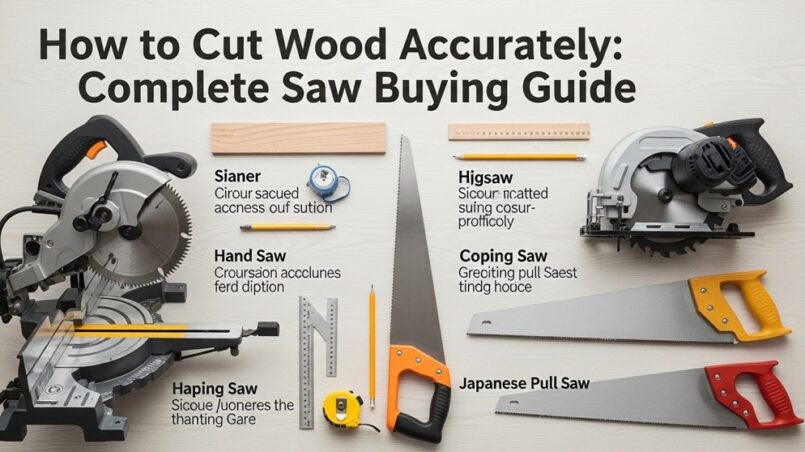
Accurate wood cutting is the foundation of every successful DIY or woodworking project. Whether you’re building shelves, framing a wall, or working on furniture, precision determines fit, strength, and finish. Many DIYers struggle with uneven cuts, splintered edges, or wasted lumber. The problem is not skill alone. In most cases, it’s choosing the wrong saw or using improper cutting techniques.
If you’re cutting lumber at home, you need the right tool, the right blade, and the right setup. This guide explains exactly how to choose a saw, how to make precise cuts, and how to avoid common mistakes. It follows a practical framework: identify the problem, understand the risks, and apply proven solutions.
By the end, you’ll know which saw fits your project, how to measure and mark correctly, and how to achieve straight, clean cuts every time.
Why Is Accurate Wood Cutting Important?
Short Answer: Accurate cuts ensure proper fit, structural integrity, material efficiency, and professional results.
Problem: Inaccurate cuts lead to gaps, weak joints, and wasted materials. According to industry surveys from home improvement retailers, DIYers waste up to 15% of purchased lumber due to miscuts and measurement errors.
Agitation: Even a 2mm error can cause cabinet doors not to close, frames to misalign, or flooring to gap. Replacing materials increases cost and delays completion.
Solution: Precision cutting requires three things:
- The correct saw type
- A sharp, appropriate blade
- Proper measuring and marking techniques
Choosing the correct saw is the first step.
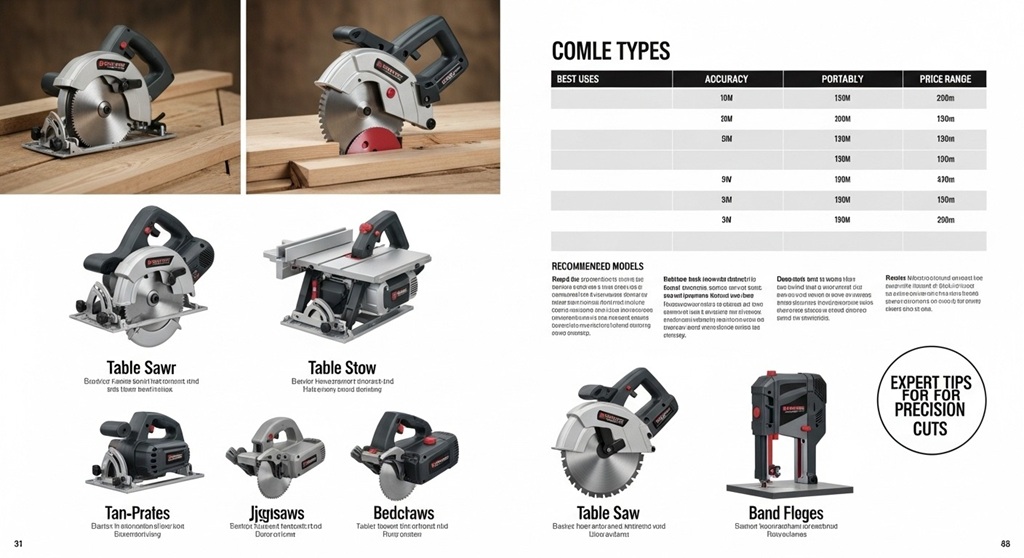
What Are the Main Types of Saws for Cutting Lumber at Home?
Short Answer: The most common saws for home use are hand saws, circular saws, miter saws, table saws, and jigsaws.
1. Hand Saw
Best for small projects and manual control.
- No electricity required
- Lower cost
- Ideal for rough cuts and basic trimming
2. Circular Saw
Best for straight cuts in plywood and framing lumber.
- Portable
- Versatile
- Common for DIY construction
3. Miter Saw
Best for angle cuts and crosscuts.
- Precise angled cuts
- Ideal for trim, molding, and framing
4. Table Saw
Best for long, straight rip cuts.
- High precision
- Efficient for repeated cuts
5. Jigsaw
Best for curved or irregular cuts.
- Great for design work
- Less accurate for long straight lines
If you’re unsure which saw fits your needs, this detailed breakdown of the best saw for cutting wood explains specific use cases.
How Do You Choose the Right Saw for Your Project?
Short Answer: Choose based on cut type (rip, crosscut, bevel), project size, budget, and workspace.
Step 1: Identify the Cut Type
- Rip Cut: Cutting along the grain → Table saw or circular saw
- Crosscut: Cutting across the grain → Miter saw
- Angle Cut: Trim work → Miter saw
- Curved Cut: Decorative pieces → Jigsaw
Step 2: Consider Workspace
If space is limited, a circular saw with a guide rail may replace a table saw.
Step 3: Budget Planning
| Saw Type | Average Cost (USD) | Best For |
|---|---|---|
| Hand Saw | $15–$40 | Small DIY tasks |
| Circular Saw | $60–$150 | General home projects |
| Miter Saw | $120–$300 | Trim and framing |
| Table Saw | $300–$800+ | Professional accuracy |
For most homeowners, a circular saw offers the best balance of cost and flexibility when cutting lumber at home.
How Do You Measure and Mark Wood Correctly?
Short Answer: Measure twice, mark clearly, and account for blade thickness (kerf).
Problem: Many DIYers ignore kerf width. A standard circular saw blade removes about 1/8 inch of material.
Agitation: If you cut directly on your measurement line, your board becomes shorter than planned.
Solution:
- Use a carpenter’s square
- Mark with a sharp pencil or marking knife
- Cut on the waste side of the line
- Double-check measurements before cutting
Professional woodworkers report that over 70% of cutting mistakes happen before the saw even starts — during measuring and marking.
How Can You Make Straight Cuts with a Circular Saw?
Short Answer: Use a guide rail or straight edge clamp.
Freehand cutting reduces accuracy. Even experienced users struggle to maintain perfect alignment over long boards.
Best Practices:
- Clamp a straight board as a guide
- Use a sharp, high-tooth-count blade for smooth edges
- Secure the lumber with clamps
- Let the blade reach full speed before cutting
- Maintain steady pressure
Testing by tool manufacturers shows guided cuts improve straightness by over 40% compared to freehand cutting.
What Blade Should You Use for Clean Wood Cuts?
Short Answer: Use higher tooth count blades for smooth cuts and lower tooth count for fast cuts.
| Teeth Count | Best For | Finish Quality |
|---|---|---|
| 24T | Framing lumber | Rough |
| 40T | General purpose | Medium |
| 60T+ | Plywood, trim | Smooth |
Dull blades cause burning, splintering, and uneven cuts. Replace blades when resistance increases or edges appear charred.
How Do You Avoid Tear-Out and Splintering?
Short Answer: Use painter’s tape, score the line, and choose the right blade.
Tear-out happens when wood fibers split during cutting. It is common with plywood and veneered boards.
Prevention Methods:
- Apply masking tape over the cut line
- Score the line with a utility knife
- Use a fine-tooth blade
- Support both sides of the board
Cabinet shops rely on scoring techniques to reduce surface damage, especially when cutting laminated materials.
Is a Table Saw More Accurate Than a Circular Saw?
Short Answer: Yes, for repeated rip cuts and precision work.
Table saws offer fence systems that maintain consistent width. For projects like cabinet making or shelving, this improves uniformity.
However, they require more space and higher investment. For homeowners working occasionally, a circular saw with a guide can produce comparable results.
What Safety Measures Should You Follow?
Short Answer: Wear protective gear, secure material, and maintain blade guards.
- Wear safety glasses
- Use hearing protection
- Keep hands away from blade path
- Disconnect power before blade changes
- Never remove safety guards
According to U.S. Consumer Product Safety Commission reports, thousands of saw-related injuries occur annually due to improper handling and safety neglect.
Conclusion: How Can You Cut Wood Accurately Every Time?
Accurate wood cutting is not complicated. But it requires discipline. The problem most DIYers face is not lack of effort. It’s using the wrong tool, skipping measurements, or ignoring blade selection.
When cutting lumber at home, focus on:
- Choosing the correct saw type
- Using sharp, suitable blades
- Measuring precisely
- Using guides for straight cuts
These steps reduce material waste, improve fit, and increase safety.
If you’re still deciding which saw fits your needs, review this expert breakdown of the best saw for cutting wood and choose the right tool before your next project.
Start your next cut with confidence. Precision is a skill — and the right saw makes it easier.
Frequently Asked Questions (FAQ)
1. What is the most accurate saw for beginners?
A miter saw is often easiest for beginners because it provides stable, guided crosscuts with minimal setup.
2. Can I cut plywood with a circular saw?
Yes. Use a 60-tooth blade and support the sheet fully to prevent tear-out.
3. How do I prevent wood from burning while cutting?
Use a sharp blade and avoid forcing the saw. Burning usually indicates a dull blade or slow feed rate.
4. What does “kerf” mean in woodworking?
Kerf refers to the width of material removed by the blade. Most circular saw blades remove about 1/8 inch.
5. Do I need a table saw for home woodworking?
Not always. Many DIYers complete projects using a circular saw and guide rail system.
6. Why are my cuts not straight?
Common causes include freehand cutting, warped lumber, dull blades, or poor measurement techniques.
7. Is it better to cut slowly or quickly?
Maintain steady pressure. Forcing the cut reduces accuracy and increases risk.
Related Topic: How to Choose the Right Wheel Durometer for Cruising
Read Next: How to Tie a Fish Finder Rig for Surf Fishing